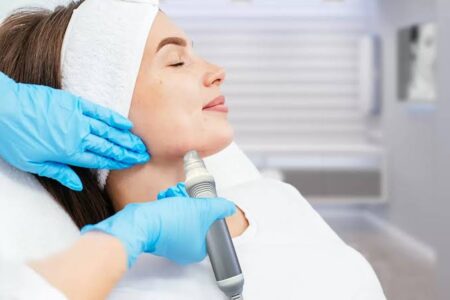
The journey of aesthetic and skincare treatments has been one of continuous innovation, moving from rudimentary practices to sophisticated, science-backed solutions. Historically, skincare was often reactive, addressing visible signs of aging after they appeared. Today, the focus has shifted dramatically towards proactive and preventative measures, leveraging our deeper understanding of skin biology and the aging process. We now have a wealth of tools at our disposal, from advanced laser technology that precisely targets concerns to cutting-edge phototherapy, all designed to maintain and restore skin health. The integration of medical-grade ingredients into daily regimens further amplifies the benefits of clinical treatments, offering a holistic approach to skin vitality. This evolution is particularly evident in the rise of Regenerative aesthetic skincare, which focuses on stimulating the body’s natural healing and rejuvenation processes for lasting results.
Understanding the Science of Skin Aging
To truly appreciate the advancements in aesthetic treatments, we must first understand the intricate science behind skin aging. Our skin, the body’s largest organ, undergoes a complex series of changes over time, influenced by both intrinsic (genetic) and extrinsic (environmental) factors. A primary culprit is the gradual decline in collagen production, which begins around age 25 and averages a 1% decrease each year. Collagen, a fibrous protein, provides structural support and firmness to the skin. Hand in hand with collagen loss is elastin degradation, leading to reduced skin elasticity and resilience.
Another critical component affected by aging is hyaluronic acid, a natural humectant that helps maintain skin hydration and plumpness. As its levels diminish, the skin becomes drier and more prone to fine lines. Repetitive muscle movements during facial expressions contribute to dynamic wrinkles, which eventually settle into static lines even when the face is at rest. Furthermore, the loss of subcutaneous fat and bone density leads to volume deflation, altering facial contours. Chronic exposure to ultraviolet (UV) radiation from the sun is perhaps the most significant extrinsic factor, causing sun damage, discoloration, and accelerating the breakdown of collagen and elastin, manifesting as hyperpigmentation and textural irregularities.
The Shift Toward Non-Surgical Interventions
The past decade has witnessed a profound shift in patient preferences and technological capabilities, favoring non-surgical interventions over traditional invasive surgeries. This paradigm shift is driven by several compelling factors. Patients increasingly seek treatments that deliver significant results with minimal invasiveness, enabling rapid recovery and little to no downtime. This aligns with modern lifestyles where long recovery periods are often impractical.
The emphasis has also shifted towards preventive care, with many individuals beginning aesthetic treatments in their late 20s and 30s to mitigate early signs of aging and maintain a youthful appearance. This proactive approach often involves customized protocols tailored to individual skin types, concerns, and goals, resulting in more natural-looking, harmonious outcomes. Crucially, patient safety remains paramount, and non-surgical procedures, when performed by qualified professionals, generally carry lower risks compared to surgical alternatives. The accessibility and affordability of these treatments have also contributed to their widespread adoption, making aesthetic enhancement a more attainable goal for a broader demographic.
Injectable Rejuvenation: Neuromodulators, Fillers, and Biostimulators
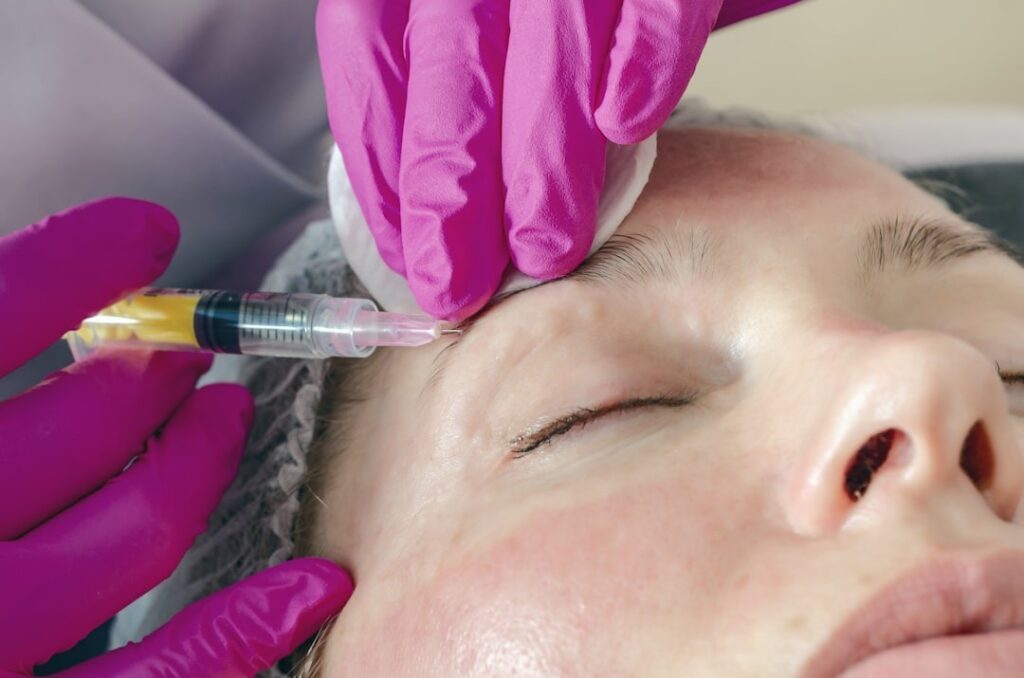
Injectable treatments represent a cornerstone of modern aesthetic medicine, offering powerful solutions for facial rejuvenation without the need for surgery. The art and science of injectables lie in a deep understanding of facial anatomy, allowing skilled practitioners to precisely target concerns, restore lost volume, provide structural support, and achieve natural-looking results. These treatments are highly customizable, addressing everything from fine lines and wrinkles to significant volume loss and contouring desires.
Neuromodulators as the Foundation of Wrinkle Prevention
Botulinum toxin, commonly known by brand names like Botox and Dysport, remains the most popular non-surgical cosmetic treatment globally, with over 9.2 million procedures performed in 2022. These neuromodulators work by temporarily relaxing specific facial muscles responsible for dynamic lines—the wrinkles that appear with facial expressions such as frowning, squinting, or raising eyebrows. By inhibiting muscle contractions, neuromodulators effectively smooth existing lines and, crucially, prevent new ones from forming or deepening.
Beyond their well-known wrinkle-reducing effects, neuromodulators have a range of therapeutic applications. They can be used for masseter reduction, which not only slims the jawline for a more V-shaped appearance but also helps alleviate symptoms of temporomandibular joint (TMJ) disorders. Additionally, botulinum toxin is highly effective in treating hyperhidrosis (excessive sweating) by blocking the nerve signals that stimulate sweat glands. The effects typically last between three and four months, making it a reliable and versatile treatment for both aesthetic enhancement and medical concerns.
Dermal Fillers for Volume Restoration and Contouring
Hyaluronic acid dermal fillers are the second most common non-surgical procedure, with over 4.3 million treatments globally in 2022. These gels, composed of a naturally occurring substance in the skin, are expertly injected to restore lost volume, enhance facial contours, and smooth deep folds and wrinkles. As we age, the natural fat pads in our face diminish, leading to hollows under the eyes, flattened cheeks, and deepening nasolabial folds. Dermal fillers effectively replenish lost volume, creating a more youthful, refreshed appearance.
Beyond volume restoration, fillers are also used for precise contouring, such as defining the jawline, enhancing the lips for natural plumpness, or providing structural projection to areas like the chin or temples. The longevity of dermal fillers varies depending on the product’s density, the treated area, and individual metabolism, typically lasting between six and eighteen months. Their immediate results and versatility make them a cornerstone of facial rejuvenation, offering significant aesthetic improvements with minimal downtime.
Biostimulatory Injectables for Deep Collagen Synthesis
While neuromodulators relax muscles and dermal fillers add volume, biostimulatory injectables take a different approach: they stimulate the body’s own collagen production. Products like poly-L-lactic acid (e.g., Sculptra) and calcium hydroxylapatite (e.g., Radiesse) are designed to trigger a gradual, natural rejuvenation process. Instead of providing immediate volume, these injectables work by creating a scaffolding effect and signaling the body to produce new collagen over several months.
This process leads to a subtle yet significant improvement in skin thickness, elasticity, and overall facial volume. The results are long-lasting, often lasting 2 years or more, as the newly formed collagen provides sustained structural support. Biostimulatory injectables are particularly effective for addressing generalized facial volume loss, improving skin laxity, and enhancing areas that benefit from long-term collagen remodeling. For those considering comprehensive aesthetic approaches, exploring options like NorCal Surgery aesthetic treatments can provide insights into how these advanced injectables integrate into broader rejuvenation plans, often complementing surgical outcomes or providing robust non-surgical alternatives.
Advanced Device-Based Aesthetic and Skincare Treatments
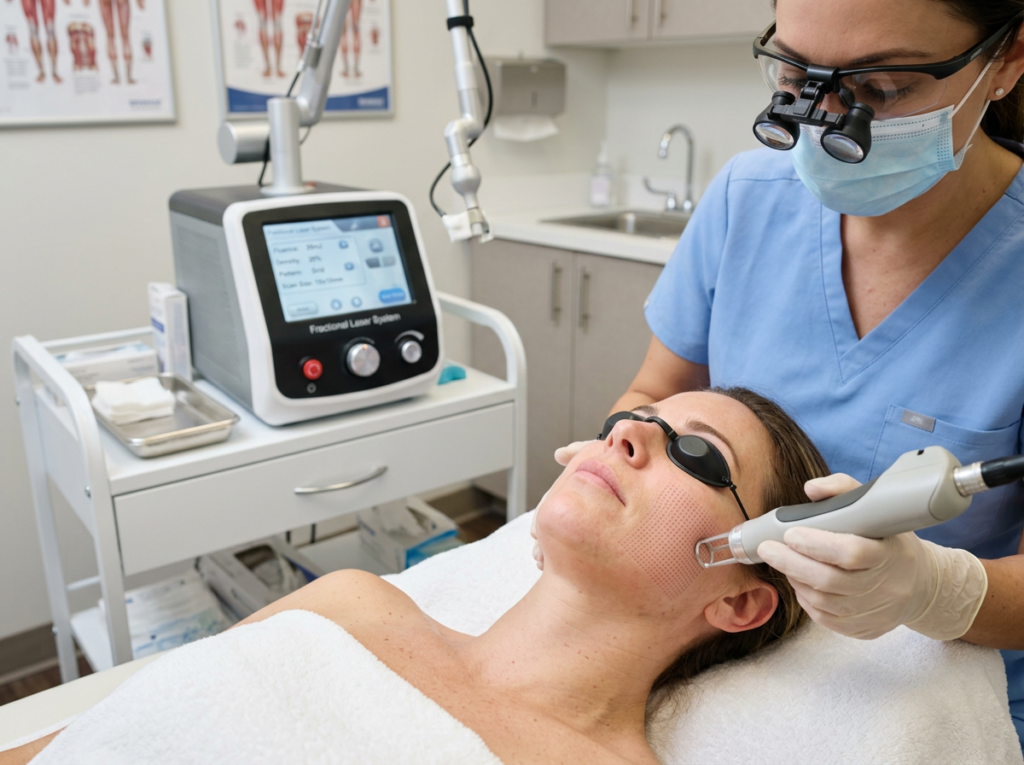
Beyond injectables, a wide array of advanced device-based treatments offers powerful solutions for improving skin tone, texture, and tightness. These energy-based devices harness various forms of energy—light, radiofrequency, and ultrasound—to stimulate cellular processes, remodel collagen, and promote epidermal renewal. They represent a significant leap in our ability to address complex skin concerns with precision and efficacy.
Fractional Lasers and Light-Based Therapies
Fractional lasers and intense pulsed light (IPL) therapies are at the forefront of non-invasive skin resurfacing and rejuvenation. Fractional resurfacing lasers, such as CO2 and non-ablative options like MOXI, create microscopic treatment zones in the skin while leaving surrounding tissue intact. This controlled injury stimulates the body’s natural healing response, leading to the production of new collagen and elastin, as well as the shedding of damaged skin cells. The result is improved skin texture, reduced fine lines, diminished scarring, and a more even skin tone.
IPL, often referred to as BroadBand Light (BBL), utilizes a broad spectrum of light to target specific chromophores in the skin, such as melanin (for pigment correction) and hemoglobin (for vascular lesions like redness and broken capillaries). It effectively addresses sun damage, age spots, rosacea, and overall skin discoloration, leading to a brighter, more uniform complexion. The combination of BBL and MOXI, sometimes called “The Aleris Stack” in some clinics, is a popular protocol for comprehensive skin rejuvenation that targets both pigment and texture with minimal downtime.
Radiofrequency Microneedling for Deep Tissue Remodeling
Radiofrequency (RF) microneedling combines the collagen-inducing benefits of traditional microneedling with the deep heating action of radiofrequency energy. Devices like Morpheus8 use tiny needles to create controlled micro-injuries in the skin, while simultaneously delivering RF energy deep into the dermis and subdermal tissue. This dual action significantly boosts collagen and elastin production, leading to superior skin tightening and remodeling compared to microneedling alone.
RF microneedling is highly effective for improving skin laxity, reducing the appearance of fine lines and wrinkles, and minimizing acne scarring. It can also target subdermal adipose remodeling, helping contour and tighten the face and body by gently melting superficial fat cells while stimulating collagen. The depth of the needles and the intensity of the RF energy can be precisely adjusted, allowing for customized treatments that address a range of concerns on various skin types and tones. While some downtime, typically a few days of redness and swelling, may be expected, the results in terms of skin firmness and texture are often profound and long-lasting.
Regenerative Medicine and Skin Resurfacing Protocols
The cutting edge of aesthetic and skincare treatments increasingly integrates principles from regenerative medicine, focusing on stimulating the body’s innate capacity for repair and renewal. These protocols often combine advanced delivery methods, such as microneedling, with powerful biological agents to enhance cellular communication, promote growth factors, and accelerate epidermal exfoliation. The goal is not just to correct visible imperfections but to fundamentally improve skin health from within.
The Role of Regenerative Bio-Signals in Aesthetic and Skincare Treatments
Regenerative bio-signals represent a new frontier in skin renewal. Platelet-Rich Fibrin (PRF) is a natural treatment derived from the patient’s own blood. Unlike traditional PRP (Platelet-Rich Plasma), PRF contains a higher concentration of platelets, growth factors, and a fibrin matrix that acts as a scaffold, slowly releasing these potent healing compounds over an extended period. This sustained-release formula stimulates collagen production, accelerates healing, and rejuvenates the skin, making it ideal for delicate areas like under the eyes or for use in combination with microneedling for enhanced facial rejuvenation.
Exosomes are even more advanced, acting as nano-sized messengers released by stem cells. They carry a rich cargo of growth factors, peptides, lipids, and nucleic acids that facilitate cellular communication and function. When applied topically or delivered via nano-infusion, exosome serums like the E-50 Skin Booster, a Korean-developed complex, guide skin cells towards optimal health, promoting hydration, elasticity, luminosity, and smoothness. This intelligent approach supports skin’s natural regeneration rather than simply feeding it, offering a deeper reawakening of the skin’s biological processes. Peptide complexes also play a crucial role, acting as signaling molecules that prompt skin cells to perform specific functions, such as producing more collagen or reducing inflammation, thereby contributing to cellular repair and supporting the wound-healing cascade.
Clinical Exfoliation and Hydration Technologies
Clinical exfoliation and hydration technologies are essential for maintaining skin health, addressing specific concerns, and optimizing the penetration of regenerative treatments. Chemical peels, which range from gentle glycolic acid to medical-grade formulations, use various acids to remove the damaged outer layers of the skin. This process accelerates cellular turnover, improves skin texture, reduces hyperpigmentation, treats acne, and minimizes the signs of aging. The type and strength of the peel are customized to the individual’s skin type and concerns, with varying degrees of downtime.
Dermaplaning is a manual exfoliation technique that uses a sterile surgical blade to gently remove dead skin cells and vellus hair (peach fuzz) from the skin’s surface. This non-chemical method immediately reveals smoother, brighter skin and improves product absorption. Hydradermabrasion treatments, exemplified by the popular Hydrafacial, combine cleansing, exfoliation, extraction, and hydration in a single session. This multi-step process uses patented technology to deliver nourishing serums into the skin, resulting in instant gratification with no downtime. These treatments are crucial for optimizing the barrier, ensuring the skin is healthy, hydrated, and receptive to further therapeutic interventions. For a broad spectrum of professional skin solutions, consulting with a specialist for Dermatologist skincare treatments can provide tailored recommendations for clinical exfoliation and hydration, ensuring optimal skin health.
Navigating Clinical Standards and Treatment Planning
Choosing the right aesthetic and skincare treatments requires careful consideration of several factors, including the provider’s credentials, the clinic’s standards, and the integration of treatments into a personalized plan. The distinction between a med spa, a physician-led clinic, and a dermatology practice is crucial. While all can offer aesthetic services, the level of medical oversight and expertise can vary significantly. Physician-led clinics and dermatology practices often provide a higher degree of medical expertise, ensuring treatments are performed safely and effectively, especially for complex cases or when medical conditions are present. Board certification for physicians and physician-trained aestheticians is a key indicator of rigorous education and training.
Regardless of the setting, clinical safety should always be a top priority. This includes using authentic, medical-grade products sourced directly from manufacturers, adhering to strict hygiene protocols, and having emergency procedures in place. A personalized treatment plan, developed after a thorough consultation and skin analysis, is paramount. This plan should consider individual skin type, concerns, goals, and lifestyle, often combining in-office procedures with a customized home care regimen using medical-grade products to enhance and maintain results. Transparency regarding costs, potential downtime, and expected results is also essential for informed decision-making.
Here’s a generalized comparison of typical costs, downtime, and longevity for some popular treatments:
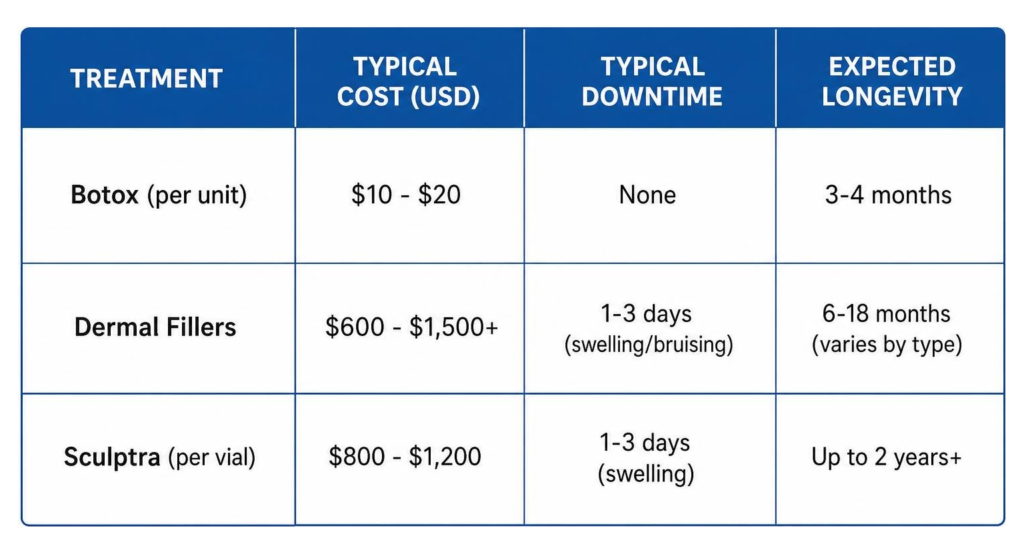
Note: Costs and longevity are approximate and can vary widely based on location, provider expertise, and specific product used.
Frequently Asked Questions about Aesthetic and Skincare Treatments
What is the difference between dynamic and static wrinkle treatments?
Understanding the distinction between dynamic and static wrinkles is key to choosing the most effective treatment. Dynamic wrinkles are those that appear when you make facial expressions, such as frown lines between the brows, crow’s feet around the eyes, or forehead lines. They are caused by the repetitive contraction of underlying facial muscles. Neuromodulators like Botox are the primary treatment for dynamic wrinkles, as they work by temporarily relaxing these muscles, smoothing out the lines and preventing them from deepening.
Static wrinkles, on the other hand, are visible even when your face is at rest. These lines are often a result of long-term dynamic wrinkling, combined with volume loss, collagen degradation, and sun damage. Dermal fillers are typically used to treat static wrinkles by filling in the creases and restoring lost volume, effectively lifting and smoothing the skin. Often, a combination approach using both neuromodulators for dynamic lines and dermal fillers for static lines yields the most comprehensive and natural-looking rejuvenation.
How do regenerative treatments like exosomes differ from traditional skincare?
Traditional skincare primarily focuses on topical application of ingredients that nourish, protect, and superficially treat the skin. These products often contain antioxidants, humectants, and exfoliants that work on the skin’s surface or in its upper layers. While highly beneficial for daily maintenance and addressing surface concerns, their ability to deeply impact cellular function is limited.
Regenerative treatments, particularly those involving exosomes, operate at a much deeper, cellular level. Exosomes are not just ingredients; they are intelligent cellular messengers containing growth factors, peptides, and genetic information. When delivered into the skin, they communicate with native skin cells, instructing them to repair, regenerate, and function more optimally. This means they can stimulate collagen and elastin production, reduce inflammation, accelerate wound healing, and improve overall skin quality from within. This signal transduction leads to profound, long-lasting rejuvenation that traditional skincare, while complementary, cannot achieve on its own. They essentially “re-educate” skin cells to improve health and vitality.
What should be expected regarding downtime across different clinical procedures?
Downtime is a crucial consideration for many patients when planning aesthetic treatments, and it varies significantly depending on the procedure’s invasiveness and mechanism of action. “Social downtime” refers to the period during which visible side effects (like redness, swelling, bruising, or peeling) might make you prefer to avoid social engagements.
For minimally invasive treatments like Botox, Hydrafacial, or MOXI laser, downtime is often minimal to none, with most patients resuming normal activities immediately. You might experience slight redness or minor bruising at injection sites, which typically resolves within a day or two.
More intensive treatments, such as chemical peels (medium depth), traditional microneedling, or BBL/IPL, may involve a few days of redness, swelling, or visible peeling/darkening of pigmented spots. During this healing phase, diligent post-treatment care, including gentle cleansing and moisturizing, is essential.
Aggressive treatments like CO2 laser resurfacing or Morpheus8 (RF microneedling) can have more substantial downtime, ranging from three days to two weeks. Patients might experience significant redness, swelling, crusting, or peeling. Strict adherence to post-treatment care instructions, including rigorous sun avoidance and use of prescribed topical agents, is vital to ensure proper healing and optimal results. Always discuss expected downtime thoroughly with your provider to align expectations with your lifestyle.
Conclusion
The realm of aesthetic and skincare treatments in July 2026 is characterized by unprecedented innovation, offering a sophisticated array of options to meet diverse needs and goals. From the precision of neuromodulators and the art of dermal fillers to the profound, long-lasting effects of biostimulatory injectables, we have powerful tools to address the signs of aging. Advanced device-based therapies, including fractional lasers and radiofrequency microneedling, continue to refine skin texture, tone, and tightness. Moreover, the exciting emergence of regenerative medicine, leveraging bio-signals like PRF and exosomes, promises deeper cellular renewal and sustained skin health.
The journey to radiant, healthy skin is highly personal. It requires a thoughtful approach, prioritizing professional guidance, personalized treatment plans, and a commitment to both in-clinic procedures and a supportive home care regimen. By understanding the science behind these advancements and making informed choices with qualified practitioners, we can embrace the future of aesthetics with confidence, achieving natural-looking results that truly reflect our inner vitality and well-being.