

Broad, capped shoulders change how your whole physique looks. They widen your frame, balance your waist, and make every shirt…
Read trusted health tips, wellness advice, nutrition guides, fitness ideas, and simple ways to live a healthier and happier life.
Broad, capped shoulders change how your whole physique looks. They widen your frame, balance your waist, and make every shirt…

A sauna thermometer can be surprisingly unhelpful when read without context. Two rooms displaying the same temperature may feel completely…

For new parents and growing families, traveling to a medical clinic with a newborn or sick child can introduce unnecessary stress and potential exposure to germs. Choosing personalized Pediatric Home Visits brings high-quality medical care directly into the safety and comfort of your living room. Experience with pediatric home visits allows board-certified pediatricians to assess a child’s health in their natural environment while offering parents unhurried, one-on-one clinical support. From postpartum infant checkups to peaceful sick-child evaluations, house calls represent a modern resurgence of compassionate, patient-centered medicine. Key Takeaways: Why Choose Pediatric Home Visits? Redefining Primary Care: The Rising Demand for Pediatric Home Visits Traditional clinic visits often feel rushed and transactional, leaving parents with unanswered questions once they return home. Incorporating pediatric home visits into a modern family’s healthcare routine restores the intimate doctor-patient relationship lost in high-volume practices. By evaluating a child where they sleep, play, and eat, pediatricians gain crucial context that standard clinical settings cannot replicate. This house-call model ensures that care plans are tailored precisely to the child’s actual living environment. Clinical FeatureTraditional In-Clinic CareModern Pediatric Home VisitsPrimary EnvironmentSterile, Unfamiliar OfficeComfortable, Familiar HomeInfection RiskHigh (Shared Waiting Rooms)Zero External ExposureAppointment Duration10–15 Minutes45–60 MinutesEnvironmental ContextLimited to Verbal ReportsDirect Home Observation Primary Clinical Scenarios for House Call Pediatrics Dedicated home visits provide tangible medical benefits across several key developmental stages and clinical situations. 1. Newborn Care and Early Postpartum Support The first weeks after delivery are filled with joy, physical recovery, and constant adjustment. House calls ensure infants receive critical early oversight without requiring tired mothers to leave home. 2. Acute Sick Care and Diagnostic Triage When a child develops a fever, earache, or sudden rash, resting at home is far better than traveling to an urgent care clinic. 3. Comprehensive Well-Child Evaluations Routine developmental checkups can also be conducted at home, giving physicians a clearer picture of growth milestones. Integrating Whole-Child Lifestyle Medicine at Home Conducting visits inside the home enables pediatricians to combine evidence-based medicine with practical, functional lifestyle strategies that support long-term child health. Lifestyle Wellness PillarPrimary Home Focus AreasTargeted Clinical StrategiesPediatric NutritionKitchen setups, feeding routines, and allergies• Nutrient-dense mini meals• Food allergy management• Gut health optimizationBehavioral & Mental HealthHome atmosphere and screen habits• Emotional regulation techniques• Screen time boundary plans• School anxiety supportRestative Sleep HygieneNursery setup and bedtime light control• Circadian alignment routines• Sleep environment setupPhysical ActivitySafe indoor/outdoor play spaces• Posture and growth alignment• Youth sports safety tracking Addressing environmental factors directly helps prevent recurring health issues and fosters a healthier domestic ecosystem for the whole family. How to Schedule and Prepare for a House Call Visit Experiencing a home checkup is simple, smooth, and designed to eliminate hassle for busy parents. Here is how the process works:…
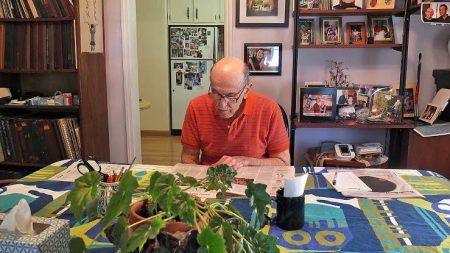
Ask most people to picture a lonely older adult, and the image that comes to mind is often a woman: a widow living alone, perhaps, surrounded by photographs of a fuller life. The reality tells a different story. Older men, not women, consistently report the highest rates of social isolation in the United States, and the consequences reach far beyond hurt feelings. Isolation in older men is linked to higher rates of depression, cognitive decline, cardiovascular disease, and premature death, yet it remains one of the least discussed health risks facing aging Americans. This article looks at why older men end up isolated more often than older women, why the warning signs are so easy for families to miss, and what actually helps. The Scope of the Problem Loneliness among older adults has become significant enough that the U.S. Surgeon General issued a formal advisory on the subject in 2023, describing social disconnection as a public health concern on par with other major risk factors and noting that its health effects are comparable to smoking a pack of cigarettes a day. Within that broader picture, older men consistently show up as one of the highest-risk groups. Several patterns show up again and again in research on aging and social connection: None of this means women don’t experience loneliness in later life. They do, often significantly. But the data consistently shows that men are less equipped, socially and emotionally, to rebuild connection once it’s lost, which leaves them more vulnerable when a major life change strips away the structures that used to provide it. Why Men Lose Their Social Networks First Loneliness in older men rarely arrives suddenly. It tends to build gradually, often traced back to a handful of specific transitions. Retirement removes a built-in social structure. For many men, work has functioned as their primary source of daily social contact for decades. Coworkers, work friendships, the structure of a workday, all of it disappears at retirement, often without anything built to replace it. Women are statistically more likely to maintain social networks outside of work throughout their careers, which gives them something to fall back on when their job ends. Many men don’t have that same backup structure in place. Friendship patterns differ significantly by gender. Research on adult friendship consistently finds that men’s friendships tend to be built around shared activities, work, sports, hobbies, rather than the kind of direct emotional check-in that tends to sustain relationships once those shared activities stop. When the activity goes away (the job ends, the golf group stops meeting, health limits the activities that used to bring people together), the friendship built around it often quietly fades with it. The loss of a spouse hits men differently. In many households, a wife has served as the family’s primary social coordinator, the one who calls the kids, plans visits, remembers birthdays, and maintains friendships on behalf of the household. When she is no longer there, either through death or divorce, that entire social infrastructure often disappears with her, and many men have no established pattern for rebuilding it on their own. Cultural expectations discourage help-seeking. Many men in the current generation of older adults were raised with strong cultural messaging around self-reliance and emotional restraint. Admitting to loneliness, or actively seeking out new friendships and social opportunities, can feel deeply uncomfortable in a way it often doesn’t for women of the same generation, who are more likely to have practiced this kind of relationship-building throughout their lives. Physical limitations compound the problem. Mobility issues, hearing loss, vision changes, or no longer being able to drive can each independently shrink a person’s world. For a man who is already socially thin, losing the ability to easily leave the house can be the final piece that tips isolation into full withdrawal. Why the Health Consequences Are So Serious Loneliness is not simply an emotional discomfort. It functions as a measurable health risk, and the evidence for this has grown substantially over the past decade. Chronic loneliness has been associated with increased risk of heart disease, stroke, and high blood pressure, likely tied to the way sustained social stress affects the cardiovascular system over time. It has also been linked to faster cognitive decline and a higher risk of dementia, since regular social engagement appears to help maintain cognitive function in ways that isolated daily routines do not. Depression is significantly more common among isolated older adults, and for older men specifically, that combination of depression and isolation is particularly dangerous. Men over 65 have the highest suicide rate of any demographic group in the country, a statistic that has remained persistently high even as public awareness of mental health has grown elsewhere in society. Perhaps most striking, several long-term studies have found that chronic loneliness is associated with an increased risk of early death, with some researchers describing the mortality impact as comparable to other well-established risk factors like obesity or physical inactivity. Isolation, in other words, is not just unpleasant. For older men in particular, it behaves like a serious medical risk factor in its own right. Why Families Often Miss the Signs If loneliness were obvious, families would act on it sooner. Instead, it tends to hide behind behaviors that look like ordinary aging or a stable, if quiet, personality. A few reasons the signs get missed:…

Pregnancy scans provide accurate information and peace of mind by showing how your baby is growing at every stage. There…

Why Dating Sites Ask So Many Profile Questions Before You Can Start Creating a dating profile can feel less like joining a website and more like completing an interview. Before seeing many profiles, a new member may be asked about age, location, work, education, habits, religion, politics, children, relationship goals, and personality. Some questions have a clear purpose. A dating site needs basic information to show relevant people and apply search preferences. Other questions may feed a compatibility score or become visible on the profile. A few can feel too personal, especially when the website does not explain why it needs the answer. This issue matters on every type of service, from a relationship-focused platform to a hookup site. The right amount of information can help two people understand whether they want similar things. Too much detail can make registration tiring, create false confidence in a score, or expose information that never needed to be public. [Inference] The questionnaire is best understood as a sorting and profile-building tool. It can organize stated preferences, but it cannot fully measure attraction, honesty, timing, or how two people will behave together. Why Dating Sites Need More Than a Photo and Email A dating website has a difficult starting problem. It knows almost nothing about a new member, yet the member expects useful profiles to appear quickly. Without any questions, the site may know only an email address and a rough location. That is not enough to determine who the member wants to meet, what age range is relevant, or whether the person wants casual dates, a long-term relationship, or something else. Questions give the site structured information. Structured answers are easier to sort than a free-form biography. A website can filter a field such as distance or smoking preference. It cannot reliably interpret every meaning hidden inside a paragraph written in the user’s own style. The result is a tradeoff. More questions can create more usable fields, but each extra step adds time and asks the member to share another piece of information. The Six Main Jobs of a Dating Questionnaire1. Establishing basic eligibility Some questions are necessary to create an appropriate account. Age is used to confirm that the user meets the service’s minimum requirement. Location helps the site apply geographic settings. Gender and the genders a member wants to meet help define the relevant group of profiles. These questions establish the basic boundaries within which the service operates. 2. Building search filters Many dating sites let members search by age, location, relationship goal, education, family plans, religion, lifestyle, or other criteria. Those filters work only when the website has information in consistent fields. For example, a member who does not smoke may prefer to meet another non-smoker. A parent may want to know whether another person has children or wants them. Someone who plans to move abroad may care less about current distance than a person who wants to date locally. The website does not need to declare one answer better than another. It uses the fields to connect stated preferences with available profiles. 3. Creating compatibility scores Some services use questionnaires as inputs for compatibility systems. Eharmony says every new member takes its Compatibility Quiz. According to the company’s current tour page, answers about habits, interests, goals, values, needs, and communication contribute to a Personality Profile and a Compatibility Score with other members. This explains why a site built around compatibility may ask more questions than a simple profile directory. It needs enough answers to calculate differences and similarities under its own model.…

Selling an end-of-life, broken-down, or scrap vehicle in Western Australia is significantly faster and less stressful than dealing with private…

Most people do not consciously decide to create seasonal traditions. They simply repeat small things until those things start to…

The Problem That AI Charge Capture Was Built to Solve Lost charges are a persistent problem in hospital medicine. The…

Physique development has become increasingly focused on more than simply adding body weight. As training methods have become more structured,…