
Comprehensive Care for Musculoskeletal Injuries
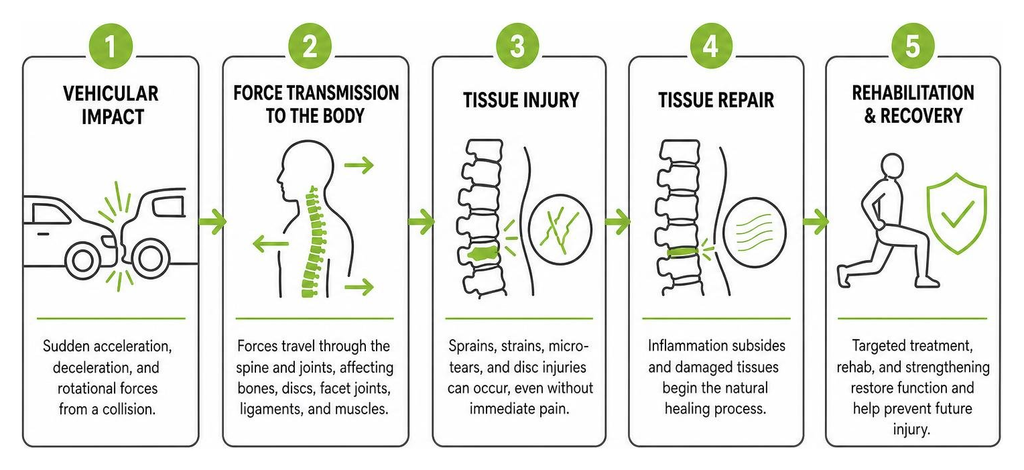
Comprehensive spine and joint medical care is an integrated, multidisciplinary approach to diagnosing, treating, and rehabilitating acute musculoskeletal trauma. Following a car accident, traumatic forces rarely damage only a single isolated tissue. Instead, the sudden acceleration, deceleration, and rotational forces impact an entire network of spinal bones, intervertebral discs, facet joints, supportive ligaments, and deep muscle groups.
When recovering from motor vehicle collisions, receiving piecemeal care from isolated providers can create diagnostic gaps and delay targeted therapy. A comprehensive model unites medical physicians, interventional pain specialists, physical therapists, and diagnostic imaging professionals under a single clinical framework.
Prompt evaluation by specialized providers ensures that subtle injuries—such as micro-tears in the lumbar musculature or early disc protrusions—are identified before they progress into chronic, debilitating conditions. Multi-state coordinated care networks, including Spine and Joint Centers of America across Florida, Missouri, and Kansas, provide patients with localized, trauma-informed medical recovery plans tailored to the exact biomechanics of vehicular collisions.
Why Does Back and Joint Pain Often Start Days After a Collision?
It is common to walk away from a motor vehicle crash feeling physically shaken but largely pain-free, only to wake up 24 to 72 hours later with severe spinal stiffness, radiating aches, or sharp joint pain. This delayed-onset discomfort is not imaginary; it is driven by predictable physiological and biomechanical mechanisms.
The Adrenaline and Endorphin Masking Effect
During a crash, your autonomic nervous system initiates a fight-or-flight response. The brain triggers a surge of adrenaline, cortisol, and endorphins. These neurochemicals temporarily elevate pain thresholds and blunt nociceptive pain signaling to help you survive immediate danger. Once these hormone levels normalize over the subsequent 12 to 24 hours, the true underlying tissue damage becomes apparent.
Inflammatory Cascade and Micro-Tears
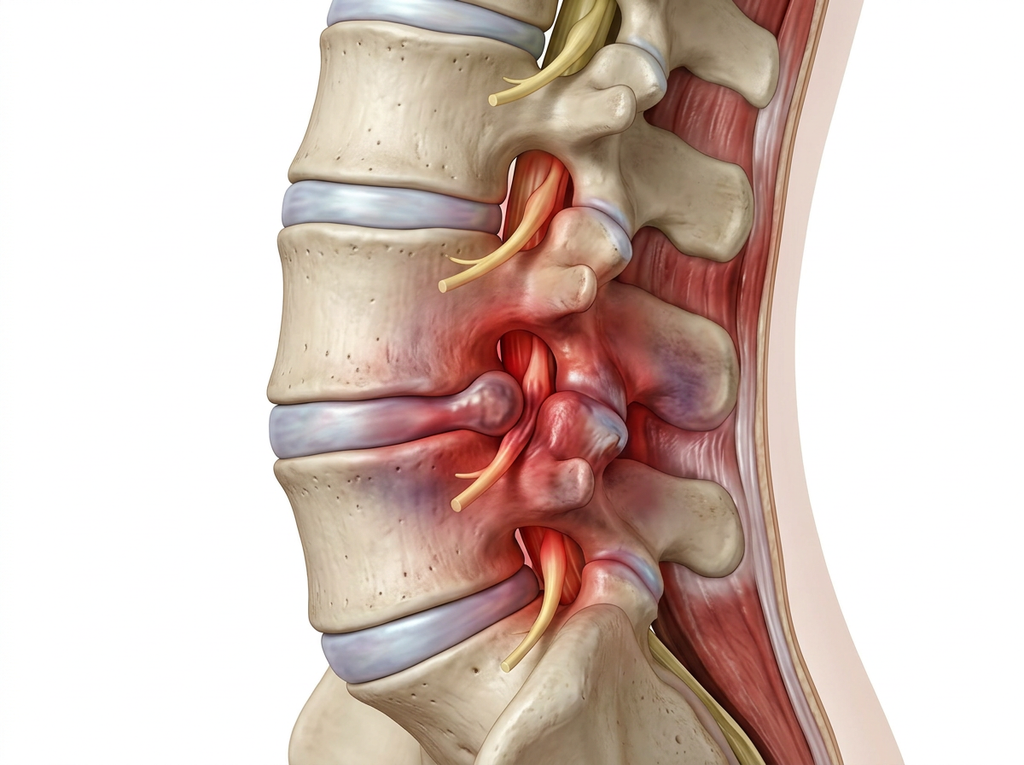
Musculoskeletal structures damaged during rapid deceleration experience structural micro-tears in muscle fibers, tendons, and ligamentous capsules. As the body initiates its immune repair response, cellular inflammation and fluid accumulation (edema) steadily increase within the confined spaces of the spinal column and surrounding soft tissue. This inflammatory cascade peaks between 24 and 72 hours post-accident, generating localized heat, swelling, and acute tenderness.
Protective Muscle Guarding Fatigue
Immediately following trauma, the body engages in involuntary muscle splinting—a reflexive contraction of regional muscles designed to immobilize the spine and protect vulnerable neurological structures. While effective in the short term, these overworked muscles eventually fatigue. As they exhaust their energy stores and begin to spasm, underlying vertebral subluxations, facet joint inflammation, and disc disruptions are exposed to mechanical stress, intensifying your pain.
Kinetic Energy Transfer in Low-Speed Crashes
Even low-speed collisions (such as a 10–15 mph rear-end impact) transfer substantial kinetic energy through the vehicle chassis directly into the occupants’ bodies. Because modern vehicles are designed with rigid passenger cabins, the force of the collision is absorbed directly by the human spine, forcing spinal segments beyond their normal physiological range of motion.
Key Delayed Symptoms to Monitor
- Progressive stiffness that makes rising from a chair or bed difficult
- Dull, persistent aching centered in the lower back (lumbar spine) or neck (cervical spine)
- Sharp or catching sensations when twisting, bending, or lifting
- Tingling, burning sensations, or “pins and needles” traveling into the buttocks, thighs, or calves
- Localized spinal tenderness sensitive to touch
When Should You Seek Immediate Medical Care for Post-Accident Back Pain?
While general soreness can often be managed through prompt outpatient evaluation, certain clinical indicators signify severe neurological compromise or unstable structural damage that warrants emergency medical intervention.

Emergency Red Flag Symptoms (Call 911 or Visit the ER)
Certain symptoms demand immediate emergency evaluation to prevent irreversible nerve damage or permanent paralysis:
- Loss of Bowel or Bladder Control: Sudden incontinence or difficulty urinating following a crash is a primary indicator of Cauda Equina Syndrome, a severe medical emergency where the bundle of nerve roots at the base of the spinal cord is compressed.
- Progressive Motor Weakness: An inability to lift the front part of your foot (foot drop), buckle knees when standing, or noticeable loss of leg strength.
- Severe Bilateral Sciatica: Intense, electric shooting pain radiating down both legs past the knees.
- Saddle Anesthesia: Loss of sensation or profound numbness in the groin, buttocks, and inner thighs.
- Spinal Pain Accompanied by High Fever: A fever alongside acute spinal stiffness can indicate rapid systemic inflammation or spinal infection following trauma.
For clear clinical thresholds on urgent spinal symptoms, consult the Mayo Clinic guidance on back pain evaluation to identify when immediate medical intervention is essential.
When to Schedule Outpatient Medical Care (Within 24–48 Hours)
If you do not exhibit emergency red flags, you should still schedule a comprehensive evaluation with a spine and joint specialist within 24 to 48 hours if you experience:
- Aches that persist or worsen after 24 hours
- Pain that limits your standard daily movements, work capacity, or sleep
- Localized back stiffness that fails to improve with gentle movement
- Mild tingling or numbness that remains intermittent
Clinical Feature Emergency Room Care (Immediate) Outpatient Specialized Care (24–48 Hours) Bowel/Bladder Function Incontinence, retention, loss of sensation Normal, unaffected Neurological Strength Progressive weakness, foot drop, falling Intact strength, mild fatigue Sensory Changes Saddle anesthesia, bilateral numbness Localized stiffness, mild intermittent tingling Pain Radiation Severe shooting pain below both knees Aches contained to lower back, hips, or glutes Primary Goal Prevent permanent spinal cord/nerve damage Diagnose soft tissue/disc trauma, initiate recovery What Types of Spine and Joint Injuries Commonly Occur in Car Accidents?
The violent forces involved in vehicular collisions can damage both hard bone structures and soft soft-tissue components throughout the musculoskeletal system.
1. Lumbar and Cervical Sprains and Strains
The sudden whiplash motion forces muscles and ligaments to stretch beyond their anatomical limits. A strain occurs when muscle fibers or tendons tear, whereas a sprain involves damage to the stabilizing ligaments connecting vertebra to vertebra. These injuries cause severe muscle spasms, localized tenderness, and marked reduction in range of motion.
2. Herniated and Bulging Intervertebral Discs
The intervertebral discs act as shock absorbers between the spinal vertebrae. The immense compression and flexion forces of a collision can tear the tough outer ring of the disc (annulus fibrosus), allowing the soft inner core (nucleus pulposus) to extrude.
- Bulging Discs: The outer layer remains intact but protrudes outward into the spinal canal.
- Herniated Discs: The inner gel leaks out, directly impinging on adjacent nerve roots. This commonly occurs at the L4-L5 and L5-S1 spinal levels, causing severe sciatica, shooting leg pain, and extremity numbness.
3. Facet Joint Syndrome
Facet joints are small, cartilage-lined joints located at the back of each spinal segment that guide and restrict spinal movement. Rapid hyperextension and hyperflexion can crush or inflame these joints, eroding the protective cartilage and causing arthritic-like pain, localized stiffness, and discomfort when arching backward.
4. Whiplash-Associated Disorders (WAD)
While typically associated with the cervical spine (neck), whiplash mechanics place tremendous torsional stress along the entire thoracic and lumbar spine. WAD can disrupt normal spinal alignment, causing tension headaches, mid-back pain between the shoulder blades, and compensatory lower back dysfunction.
5. Aggravation of Pre-Existing Asymptomatic Conditions
Many individuals have mild, underlying spinal degeneration (degenerative disc disease or minor bone spurs) that caused zero symptoms prior to a crash. The acute trauma of a collision can destabilize these quiet areas, turning an asymptomatic spinal condition into a source of continuous chronic pain.
How Do Medical Providers Evaluate and Treat Traumatic Musculoskeletal Injuries?
Accurate diagnosis following an accident requires an evidence-based clinical evaluation combined with advanced diagnostic imaging.
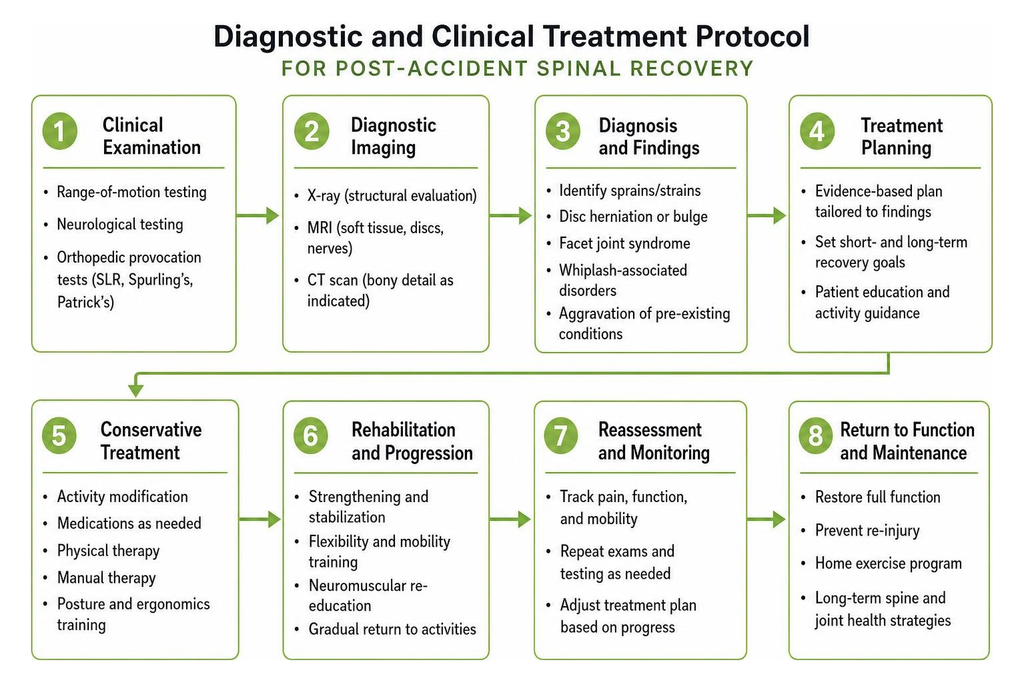
1. Clinical Physical Examination
A medical specialist begins with a comprehensive physical assessment, which includes:
- Range-of-Motion Testing: Measuring flexion, extension, and lateral rotation deficits.
- Neurological Testing: Evaluating deep tendon reflexes (patellar, Achilles), dermatome sensory mapping, and motor group strength.
- Orthopedic Provocation Tests: Conducting Straight Leg Raise (SLR), Spurling’s, and Patrick’s (FABER) tests to detect disc herniations and sacroiliac joint dysfunction.
- Palpation: Identifying localized trigger points, edema, and structural muscle guarding.
2. Advanced Diagnostic Imaging Protocols
- Digital X-Rays: Fast, initial bone integrity evaluation to rule out vertebral fractures, dislocations, and abnormal spinal curvature.
- Magnetic Resonance Imaging (MRI): The gold standard for soft-tissue evaluation. MRIs clearly visualize disc herniations, spinal canal stenosis, nerve root impingement, ligament tears, and bone marrow edema.
- Computed Tomography (CT) Scans: Provides high-resolution cross-sectional bone views when complex fractures or subtle structural bone trauma are suspected.
3. Evidence-Based Non-Surgical Treatment Options
- Targeted Physical Therapy: Focuses on restoring physiological mobility, reducing muscle guarding, strengthening the transverse abdominis and core musculature, and correcting post-traumatic posture.
- Medical Chiropractic Care: Gentle, precise mobilization and alignment techniques designed to restore normal biomechanics to restricted facet joints without aggravating disc injuries.
- Prescription Therapeutics: Short-term utilization of non-steroidal anti-inflammatory drugs (NSAIDs), muscle relaxants, or neuropathic pain modulators to control acute flare-ups.
4. Interventional Pain Management Modalities
When conservative therapies do not fully alleviate nerve-related pain, interventional treatments offer targeted relief:
- Epidural Steroid Injections (ESIs): Delivering potent anti-inflammatory medication directly into the epidural space around compressed nerve roots to alleviate radiating leg pain.
- Facet Joint Injections and Medial Branch Blocks: Targeted anesthetic and anti-inflammatory injections to diagnose and relieve localized facet joint inflammation.
- Radiofrequency Ablation (RFA): Providing long-term pain relief by temporarily desensitizing the sensory nerves supplying chronically painful facet joints.
5. At-Home Care Protocols for the First 48 Hours
- Avoid Strict Bed Rest: Prolonged bed rest stiffens spinal joints and weakens core stabilizers. Maintain light, gentle walking as tolerated.
- Cryotherapy (Cold Therapy): Apply ice packs wrapped in a cloth to painful regions for 15–20 minutes every 2 hours to blunt acute swelling and muscle spasms.
- Heat Application (After 48 Hours): Transition to moist heat after the initial inflammatory phase to increase blood flow, relax tightened muscles, and improve tissue elasticity.
- Neutral Spine Ergonomics: Sleep on your side with a pillow between your knees or on your back with a pillow beneath your knees to relieve lumbar disc pressure.
How Does Prompt Medical Documentation Protect Your Recovery and Legal Rights?
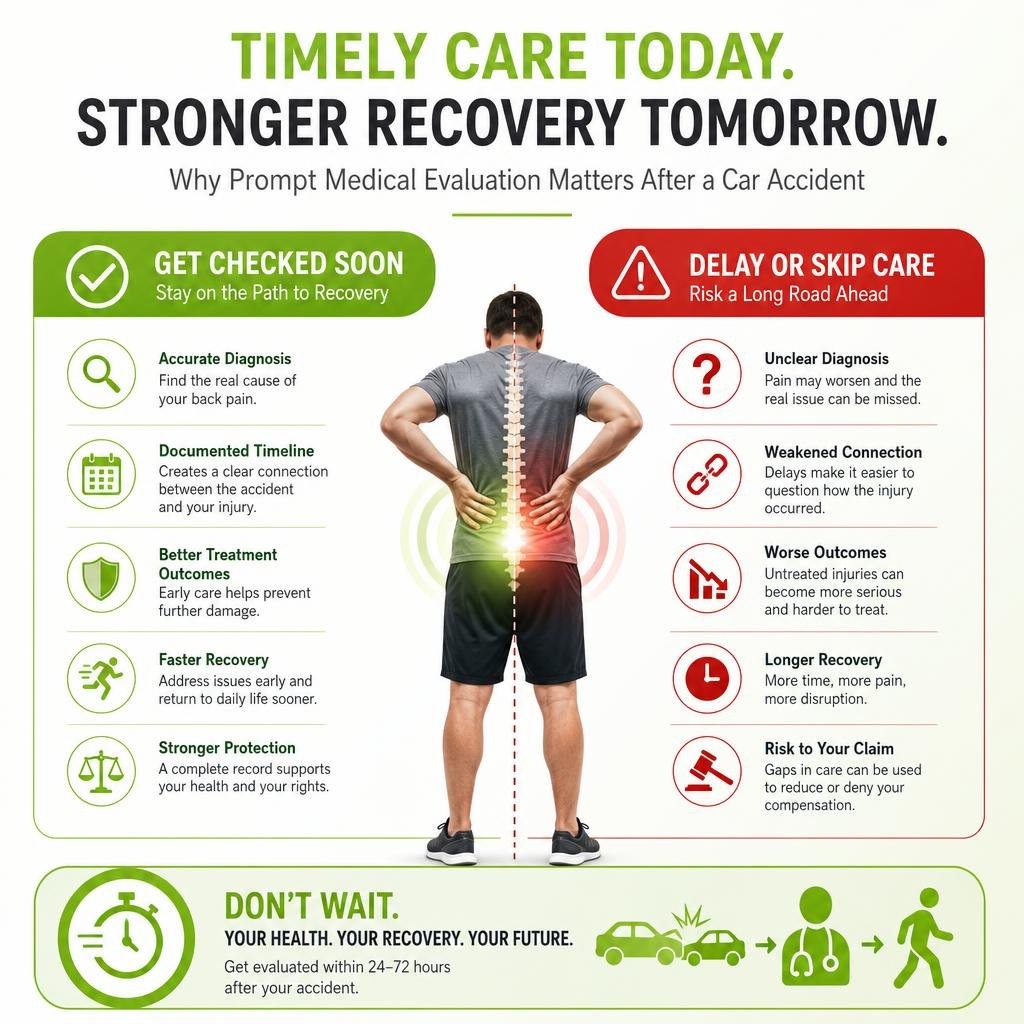
Beyond protecting your physical health, immediate medical evaluation creates the objective clinical record necessary to establish an unbroken causal link between the crash and your physical injuries.
Establishing Causation and Preventing “Gaps in Care”
Insurance adjusters look for reasons to minimize claim payouts. If you wait weeks before seeing a doctor, insurance companies will often argue that your back pain was caused by an intervening event—such as lifting groceries, exercising, or pre-existing age-related wear—rather than the auto collision.
Obtaining a medical evaluation within 24 to 72 hours documents the exact date of injury onset, the crash mechanics, and baseline functional limitations, establishing a clear link between the accident and your condition.
Strict Statutory Deadlines: Florida’s 14-Day PIP Rule
If your accident occurred in Florida, state law enforces one of the strictest medical deadlines in the country under Florida Statute § 627.736.
- The 14-Day Requirement: You must seek initial medical care from a licensed medical professional (MD, DO, DC, or hospital facility) within 14 calendar days of the motor vehicle accident.
- Total Forfeiture: If you fail to receive medical care within that 14-day window, your auto insurer will deny your Personal Injury Protection (PIP) claim, and you will receive $0 in PIP benefits, regardless of how severe your injuries are.
The Emergency Medical Condition (EMC) Threshold
Florida PIP coverage provides up to $10,000 in medical and disability benefits, but there is a significant hurdle:
- With an EMC Diagnosis: If an authorized medical provider determines that you have sustained an Emergency Medical Condition (defined as acute symptoms of sufficient severity that the absence of immediate medical attention could result in serious jeopardy to patient health or serious impairment of bodily functions), you unlock your full $10,000 PIP coverage limit.
- Without an EMC Diagnosis: If your injury is deemed non-emergent (such as mild, undocumented soreness), your PIP medical coverage is strictly capped at $2,500.
Receiving a comprehensive evaluation from an experienced medical practice ensures that hidden spinal conditions are properly documented to meet all statutory EMC criteria.
Best Practices for Your Medical and Symptom Journal
- Log pain intensity daily on a standard scale from 1 to 10.
- Note which activities trigger or worsen your pain (e.g., sitting for 20 minutes, driving, lifting children).
- Record all missed workdays, lost wages, and out-of-pocket medical expenses.
- Keep track of every appointment, diagnostic scan, and prescribed therapy regimen.
Frequently Asked Questions About Spine and Joint Medical Care?
Can a low-speed collision still cause severe disc or joint damage?
Yes. Modern automotive bumpers are engineered to protect vehicle frames, often resulting in minimal structural car damage during low-speed impacts (under 15 mph). However, this means the kinetic energy generated by the collision is not absorbed by the vehicle; instead, it transfers directly into the passenger cabin. The human spine absorbs this rapid acceleration-deceleration force, which can easily cause micro-tears in supportive ligaments, facet joint strain, and disc herniations.
How long does post-accident back and joint pain typically last?
Healing timelines vary significantly depending on the nature and severity of the injury:
- Minor Soft-Tissue Strains/Sprains: Often resolve within 4 to 8 weeks with appropriate rest, anti-inflammatory care, and physical therapy.
- Herniated Discs and Nerve Impingements: Can take 3 to 6 months or longer to stabilize and may require structured rehabilitation or interventional injections.
- Untreated Severe Injuries: Can develop into permanent, chronic pain syndromes lasting months or years due to ongoing inflammation, scar tissue formation, and spinal instability.
What should you do at home during the first 48 hours after an accident?
During the first 48 hours, avoid high-impact activities, heavy lifting, and aggressive stretching. Apply cold packs to the affected areas for 15 to 20 minutes several times per day to reduce acute swelling. Do not remain completely bedridden; take brief, gentle walks on flat surfaces to maintain circulation. Most importantly, schedule a formal clinical evaluation with a spine specialist to assess your musculoskeletal alignment.
What Are the Next Steps for Your Musculoskeletal Health?
Back pain following a car accident should never be brushed aside as simple, passing soreness. Because adrenaline surges and protective muscle guarding routinely delay the onset of symptoms for 24 to 72 hours, seeking early diagnostic medical attention is essential for protecting your long-term physical mobility.
Whether you are navigating localized back stiffness, radiating nerve pain, or looking to ensure compliance with strict insurance deadlines like Florida’s 14-day PIP rule, prompt evaluation by a multidisciplinary team is your best course of action. Multi-specialty practices like Spine and Joint Centers of America provide patients across Florida, Missouri, and Kansas with access to comprehensive diagnostics, physical therapy, chiropractic care, and interventional pain management under one coordinated umbrella.
Schedule an evaluation with a spine and joint specialist today to pinpoint your injury, start a targeted recovery plan, and protect both your musculoskeletal health and your peace of mind.