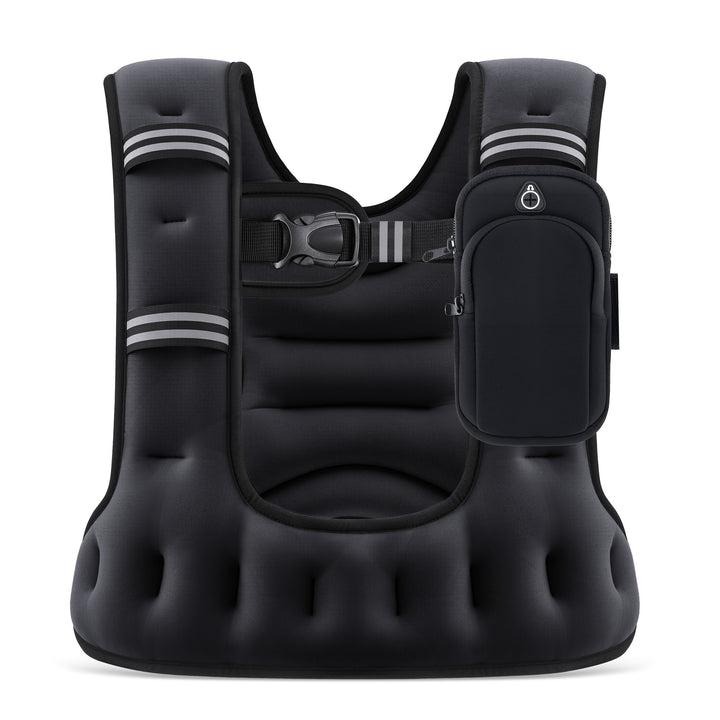
The fitness industry has a long history of taking a men’s product, making it smaller, changing the color, and calling it a women’s version. For some gear, that works well enough. For a weighted vest, it does not. The reason is anatomical: a vest carries load across the chest, shoulders, and ribcage. A cut that works for a flat chest and a narrow waist does not automatically work for a bust and a different center of gravity. When it does not work, the result is pressure, restricted breathing, and a vest that gets taken off before the walk is over.
Zelus’s U-shaped design is a direct response to this problem. The neckline is deeper, and the base is wider, which creates open space across the chest instead of compression[reference:6]. The weight is still distributed across the shoulders and back, but the front of the vest does not press where it should not press. For women who have tried a standard vest and felt like they were being “strapped into” something, the U-shape is the first design that feels like it was built around a female torso rather than adapted from a male one.
This is why the U-shape consistently comes up when people search for the best weighted vest for women for walking and everyday movement. The criteria are different from a training vest. It has to be comfortable enough to forget, secure enough not to bounce, and shaped so that the bust area is not treated as an afterthought. A vest can have the right weight and still be the wrong product if the cut forces the wearer to choose between “secure” and “breathable.”
The other half of the equation is sizing. Chest measurement—not band size, not “small/medium/large”—is the number that determines whether the vest buckles at all. Zelus’s Zelus size chart for men and women is built around this reality. It asks for chest and body weight together, because a 34 band and a 34 bust are not the same measurement, and a vest closes around the bust, not the ribcage[reference:7]. That level of specificity is not marketing fluff. It is the difference between a vest that fits on the first try and one that gets exchanged twice.
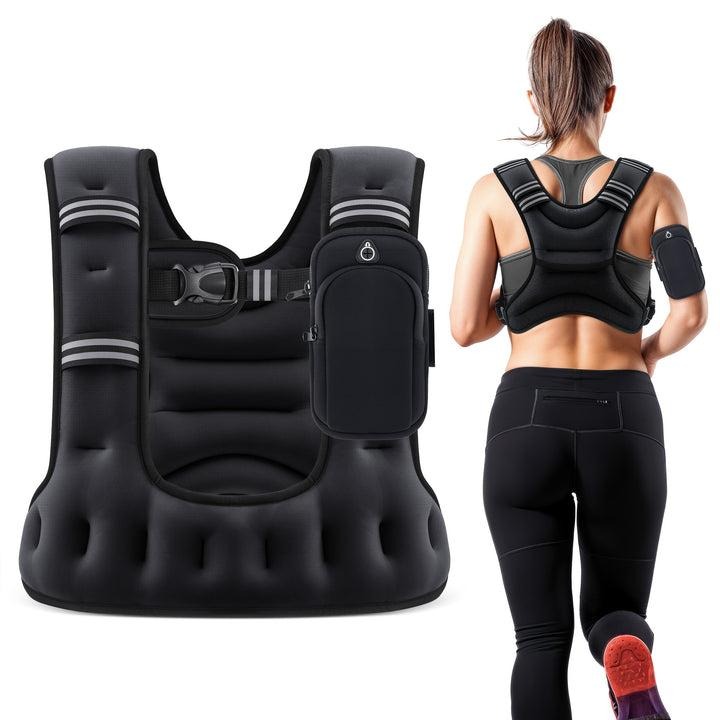
It is also worth saying what the U-shape is not. It is not a “beginner” vest or a “light” vest. It comes in fixed weights from 6 to 20 pounds and adjustable ranges from 4 to 32 pounds[reference:8]. The shape is about fit, not capability. A woman who wants to progress to heavier loads can do so within the same design family. That matters because the “women’s version” of a product often gets silently capped at a lower weight, as if female users are assumed to be less serious. The U-shape does not make that assumption.
If you have avoided weighted vests because every option you tried felt like a compromise, the issue may not be the category. It may be the cut. The full Zelus weighted vest range includes shapes for different bodies and different movement styles, and the U-shape is the clearest example of what happens when a brand designs for a specific wearer instead of adapting a generic pattern.