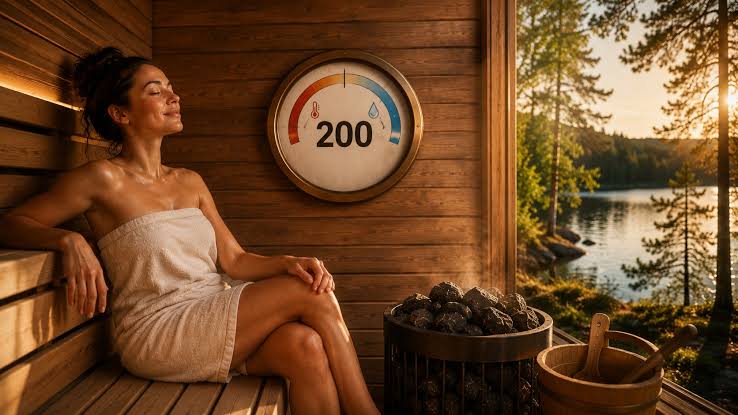
A sauna thermometer can be surprisingly unhelpful when read without context. Two rooms displaying the same temperature may feel completely different because of humidity, ventilation, heater design and the location of the sensor. A person on an upper bench may experience substantially hotter air than a companion below. The question ‘how hot should a sauna be?’ therefore deserves a more thoughtful answer than one ideal number. The right setting depends on the type of sauna, the user’s experience, the duration of the visit and any medical factors that affect tolerance. The goal is a pleasant, sensible exposure to heat, not a competition over the highest reading.
Traditional Finnish saunas often run hot and relatively dry
Many Finnish-style saunas operate at temperatures broadly around 70 to 100 degrees Celsius, or roughly 158 to 212 degrees Fahrenheit, although individual facilities vary. These rooms typically maintain relatively low ambient humidity until water is added to hot stones. The resulting steam briefly changes how the air feels against the skin. A modest change in moisture can create a surprisingly strong sensation even when the thermometer barely moves. A reading near the heater is also not necessarily representative of the air around a person’s face. Treat published temperature ranges as descriptions of common practice, not a recommendation that every visitor should seek the upper end. Beginners may prefer milder conditions and shorter stays.
Infrared cabins work differently
Infrared saunas generally use heating panels to deliver radiant energy to the body and often operate at lower air temperatures than conventional saunas. That does not mean they are automatically risk-free or that everyone should remain inside longer. The experience depends on the equipment, placement of panels, duration and the individual. Some people prefer infrared because the surrounding air feels less intense. Others value the atmosphere and steam of a traditional stone-heated room. These are legitimate preferences, not evidence that one technology is universally superior for health. People with relevant medical conditions should seek individual guidance regardless of the heating method. More comfortable air should never be mistaken for an unlimited exposure allowance.
Steam rooms introduce humidity as a major factor
Steam rooms usually operate at lower air temperatures than traditional dry saunas, but the air contains much more moisture. When humidity is high, perspiration evaporates less efficiently and the environment may feel particularly intense. Comparing a humid steam room with a dry sauna based only on displayed Celsius or Fahrenheit therefore misses an important part of how humans experience heat. Ventilation, room size and occupancy also influence comfort. Some users enjoy the moist atmosphere; others find it harder to breathe comfortably. If a room feels oppressive, step out rather than seeking a more extreme setting. The best environment is one you can use without distress while respecting the venue’s instructions.
Bench height changes your personal temperature
Warm air generally rises, which creates temperature layers inside many traditional sauna cabins. A visitor on a high bench can feel significantly warmer than someone closer to the floor, even though the thermometer on the wall shows one reading. This gives people a useful way to adjust the experience without changing the heater. Beginners can often start lower and move only if comfortable. Be careful while changing levels, especially when surfaces are warm or steps are wet. The air near the head is also why some experienced sauna-goers use a natural wool sauna hat. The fabric can buffer heat around the scalp, but it does not alter room temperature or the body’s overall exposure.
There is no meaningful temperature without a time limit
A very hot room for a brief period and a gentler room for a longer period may feel different, but neither can be judged safe from a temperature number alone. Public health guidance commonly recommends beginners start with a few minutes and many regular users keep a single visit to about fifteen to twenty minutes. Leave earlier if you develop dizziness, unusual weakness, nausea or discomfort. Sit down and cool gradually afterward. The body continues to sweat and lose fluid regardless of whether the room was heated by stones or panels. Rather than raising temperature to achieve stronger supposed health effects, prioritize a setting where you can relax and remain aware of your physical signals.
A practical way to choose your preferred setting
Begin with the facility’s recommended temperature range and choose a bench position that feels manageable. If you can control a private cabin, adjust temperature gradually and avoid sudden extremes. Try one change per visit, such as a slightly lower setting or shorter stay, so you can learn which variable affects your comfort. Keep water available for before and after the heat, and avoid alcohol. Consider whether the room’s ventilation feels adequate and whether you are recovering well afterward. If the experience is consistently unpleasant, there is no rule requiring you to adapt to a particular number. People find satisfaction in different temperature ranges, just as they prefer different shower temperatures.
Equipment and accessories do not override safety
A well-made hat, thick towel or carefully calibrated thermometer may improve a sauna routine, but none protects against every consequence of heat. Sauna Hat Club sells traditional wool accessories for head comfort, not a substitute for medical advice or prudent session length. Pregnant users and people with heart or blood pressure conditions, a history of fainting or relevant medications should discuss sauna use with a qualified professional. Avoid heat exposure while ill or dehydrated. If a person becomes confused, collapses or develops severe symptoms, seek prompt medical help. Safety must remain the foundation, even in a beautifully built home sauna.
Why chasing the hottest sauna misses the point
Online conversations sometimes celebrate extreme temperatures as if they were evidence of expertise. In reality, sauna culture encompasses a variety of traditions, room designs and personal habits. For one visitor, the highlight is a gentle, quiet visit. Another enjoys the short intensity of a traditional banya ritual with proper breaks. A third prefers a lower-temperature infrared room. These experiences cannot be ranked meaningfully by the number on the thermometer. A better measure is whether the session was comfortable, socially considerate and compatible with the individual’s health. Heat can be enjoyable without becoming a test of willpower.
Let temperature serve the ritual
For most people, the right sauna temperature is one that allows a short, enjoyable session without distress. Understand the difference between dry heat, infrared and steam, and pay attention to humidity and where you sit. Use published ranges as context, not goals. If you can leave feeling relaxed, hydrated and ready to continue your day, the room has probably served its purpose. There is no extra benefit in proving that you can tolerate a hotter number.