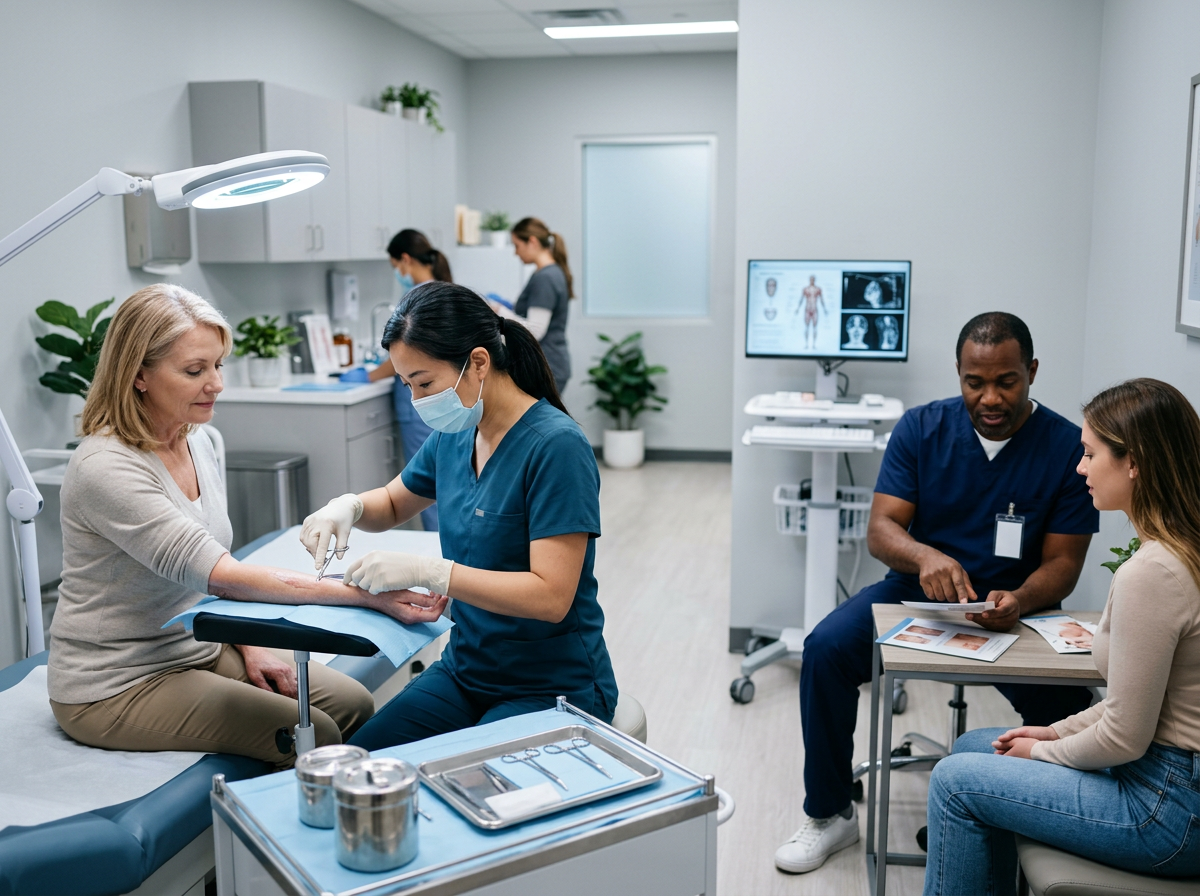
Fundamental Differences Between Aesthetic and Reconstructive Skin Procedures
The term ‘plastic surgery’ comes from the Greek word ‘plastikos.’ This means ‘to mold or shape.’ For centuries, medical professionals have used these skills. They help people restore function and improve their appearance.
Today, this field offers amazing possibilities. It ranges from correcting serious health issues to enhancing natural beauty. But many people do not know the clear differences between aesthetic and reconstructive skin procedures.
We understand this confusion. That’s why we will explore these two important areas. This article will compare their goals and methods. We will look at common examples and how technology is changing them.
We will also discuss important topics like insurance coverage and surgeon qualifications. Understanding the full spectrum of care, from essential medical and cosmetic skin care to complex surgical interventions, is vital. It helps you make safe and informed choices for your skin health and appearance.

At their core, aesthetic (often called cosmetic) and reconstructive skin procedures serve distinct primary purposes, though they frequently employ similar techniques and strive for optimal cosmetic outcomes. The fundamental distinction lies in their driving force: medical necessity versus elective enhancement.
Reconstructive surgery is primarily focused on restoring form and function to body parts affected by congenital defects, trauma, disease, or developmental abnormalities. Its goal is to bring the body back to a state of “normalcy” or as close to it as possible. This often involves repairing damaged tissues, rebuilding structures, or correcting functional impairments. Because these procedures address a medical problem, they are generally considered medically necessary.
In contrast, aesthetic surgery is performed solely to enhance a patient’s appearance. It involves altering normal anatomy to achieve a desired look, improve symmetry, or address perceived imperfections. These procedures are elective, driven by personal preference rather than medical need. While they can significantly boost self-confidence and quality of life, their primary objective is aesthetic improvement.
The differing goals naturally lead to variations in patient outcomes and insurance eligibility. Reconstructive procedures aim for functional restoration and often achieve significant improvements in a patient’s physical well-being and ability to lead a normal life. Aesthetic procedures, while offering psychological benefits, are measured by the patient’s satisfaction with their enhanced appearance. Regarding insurance, reconstructive surgeries are typically covered, at least in part, due to their medical necessity, whereas aesthetic procedures are generally not.
Here’s a simplified comparison of these two distinct yet related fields:
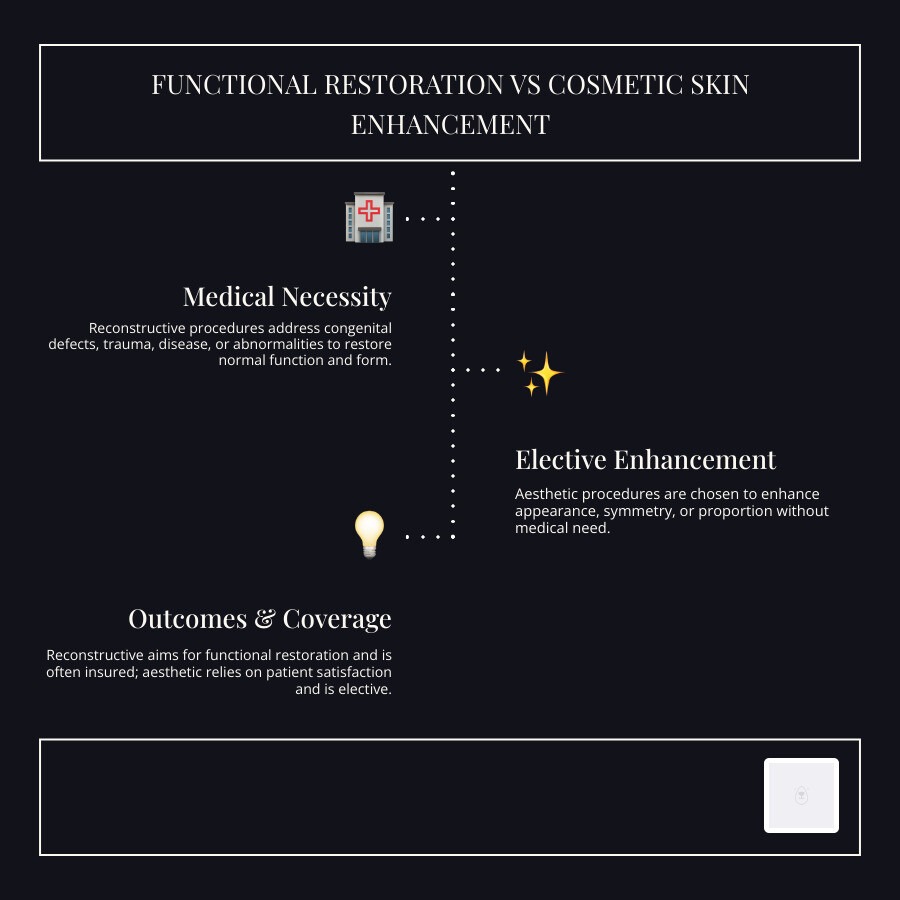
Comparison of Aesthetic and Reconstructive Skin Procedures
Feature Reconstructive Skin Procedures Aesthetic (Cosmetic) Skin Procedures Primary Goal Restore function and normal appearance Enhance appearance, proportion, and symmetry Medical Necessity Yes, addresses congenital defects, trauma, disease No, elective; alters normal anatomy for aesthetic improvement Insurance Coverage Generally covered, as it’s medically necessary Typically not covered, as it’s elective Patient Outcomes Functional restoration, improved quality of life, normalized appearance Enhanced self-image, improved confidence, desired aesthetic look Examples Cleft lip/palate repair, breast reconstruction after mastectomy, scar revision for functional impairment, post-Mohs reconstruction Facelift, breast augmentation, liposuction, purely cosmetic rhinoplasty, eyelid lift for aesthetic reasons Medical Necessity and Reconstructive Skin Care Goals
The core mission of reconstructive skin care is to mend, rebuild, and restore. This encompasses a broad spectrum of conditions and injuries. For instance, severe trauma, such as burns, facial fractures, or deep lacerations, often necessitates complex reconstructive surgery to repair damaged tissues, minimize scarring, and restore essential functions like breathing, chewing, or facial expression. Sir Harold Gillies, a pioneer during WWI, standardized many of these techniques, including rhinoplasty and facial skin grafting, which were critical for soldiers with severe facial injuries.
Congenital defects, present at birth, are another significant area. Cleft lip and palate repair, for example, is a classic reconstructive procedure that not only improves appearance but, crucially, enables proper feeding, speech development, and overall health. Microtia, a condition where the external ear is underdeveloped, also requires intricate reconstructive techniques to create a functional and aesthetically pleasing ear.
A common scenario in skin reconstruction today involves post-Mohs surgery repair. Mohs micrographic surgery is highly effective for removing skin cancers, particularly on the face, but it often leaves tissue defects. Reconstructive surgeons then step in to close these wounds, using techniques like local skin flaps (moving adjacent skin) or skin grafting (transplanting skin from another body area) to achieve the best possible functional and cosmetic outcome. This specialized reconstruction is vital for maintaining facial symmetry and anatomical function. Effective medical and cosmetic skin care often begins with addressing these foundational reconstructive needs before any aesthetic considerations can be fully explored.
Aesthetic Objectives and Overlapping Boundary Cases
While reconstructive surgery aims to restore, aesthetic surgery seeks to refine and beautify. Its objectives are purely cosmetic: to enhance facial contours, improve skin texture, reduce signs of aging, or achieve a desired body shape. Common aesthetic skin procedures include facelifts (rhytidectomy), which address sagging skin and wrinkles; blepharoplasty (eyelid surgery) for a more youthful eye appearance; and purely cosmetic rhinoplasty, which reshapes the nose for aesthetic balance.
However, the line between aesthetic and reconstructive procedures can sometimes blur, creating fascinating “boundary cases.” A prime example is blepharoplasty. While often performed for cosmetic reasons to reduce puffiness or drooping eyelids, it can also be medically necessary if severe upper eyelid drooping (ptosis) obstructs vision. In such cases, the procedure is reconstructive because it restores a functional impairment, and it may qualify for insurance coverage. Similarly, breast reduction surgery, though often sought for aesthetic reasons, can be deemed reconstructive if the breast weight causes chronic back pain, neck pain, or skin irritation, thus improving a functional issue.
Rhinoplasty provides another excellent illustration. While many seek it for purely aesthetic reasons to improve nasal shape, it can also be reconstructive when performed to correct impaired breathing caused by a deviated septum or to restore the nose’s structure after a traumatic fracture. In these instances, the surgeon aims to improve both nasal function and appearance, demonstrating the unique overlap where functional restoration and aesthetic enhancement go hand-in-hand. Scar revision is another procedure that can be both. While improving the appearance of a scar (aesthetic), it can also alleviate pain, itching, or restricted movement (reconstructive). In all these overlapping cases, the shared goal is to maximize the cosmetic appearance, regardless of the primary medical necessity.
Common Aesthetic and Reconstructive Skin Interventions

The field of skin plastic surgery has evolved dramatically, offering a wide array of interventions that cater to both reconstructive needs and aesthetic desires. These procedures range from intricate surgical techniques to advanced nonsurgical treatments, all aimed at improving tissue healing, managing scars, and restoring structural integrity or enhancing appearance.
Surgical Approaches to Aesthetic and Reconstructive Skin Procedures
Surgical interventions remain the cornerstone for significant aesthetic and reconstructive changes. In aesthetic surgery, procedures like facelifts have seen considerable evolution. Modern facelift techniques, for instance, have moved beyond simply tightening skin to focusing on deep tissue repositioning and volumetric restoration, often combined with autologous fat grafting (transferring a patient’s own fat) to address age-related volume loss. This approach yields more natural, longer-lasting results than older, two-dimensional skin-pulling methods. Lower blepharoplasty, when performed to remove excess skin or fat from the lower eyelids, is another common aesthetic procedure, with techniques like skin-pinch blepharoplasty used when only skin excision is needed, carefully preserving the orbicularis muscle.
For reconstructive purposes, surgical techniques are often more complex. When repairing defects after skin cancer removal, such as Mohs surgery, local skin flaps are frequently used. This involves carefully designing and rotating adjacent healthy skin to cover the defect, ensuring good blood supply and matching skin characteristics. Skin grafting, where a thin layer of skin is taken from one part of the body (donor site) and transplanted to another (recipient site), is crucial for larger defects or areas where local tissue is insufficient. Breast reconstruction after mastectomy, often using tissue flaps from other parts of the body or implants, is a profound example of reconstructive surgery restoring form and symmetry. These procedures demand a deep understanding of anatomy, tissue viability, and surgical precision.
Nonsurgical Innovations in Aesthetic and Reconstructive Skin Procedures
The last two decades have witnessed an explosion in nonsurgical options for skin rejuvenation, offering patients alternatives to traditional surgery with less downtime. These modalities play a significant role in both maintaining aesthetic results and addressing certain skin concerns without incisions.
Here is a list of primary nonsurgical rejuvenation modalities:
- Botulinum Toxin (e.g., Botox, Xeomin, Dysport): These neurotoxins temporarily relax muscles responsible for dynamic wrinkles (like frown lines, crow’s feet, and forehead lines), smoothing the skin. The clinical effects generally last approximately 2 to 6 months. Botulinum toxin injection for treatment of facial wrinkles is the most frequently performed cosmetic procedure in the United States.
- Dermal Fillers: These injectable substances restore volume, smooth wrinkles, and enhance facial contours.
- Hyaluronic Acid (HA) Fillers: The most common type, providing immediate volume and hydration. Results typically last 6-18 months depending on the product and area.
- Calcium Hydroxylapatite (CaHA) Fillers (e.g., Radiesse): Provide immediate volume and stimulate natural collagen production. Corrective results can last up to 12 to 20 months after injection.
- Poly-L-Lactic Acid (PLLA) Fillers (e.g., Sculptra): A collagen stimulator that gradually restores volume over several months. Originally used for facial lipoatrophy in HIV patients, studies have indicated that results from PLLA last at least 3 years with additional treatment sessions.
- Chemical Peels: Involve applying a chemical solution to exfoliate the outer layers of skin, revealing smoother, more radiant skin underneath. They can address fine lines, sun damage, and uneven pigmentation.
- Laser Resurfacing: Uses concentrated light beams to improve skin texture, tone, and reduce wrinkles, scars, and sun damage. Ablative lasers (like CO2 and Erbium:YAG) vaporize outer skin layers, while nonablative lasers heat the underlying tissue to stimulate collagen without removing the surface. Fractional lasers offer significant resurfacing with reduced recovery times by treating only a fraction of the skin at a time.
- Microneedling: Creates microscopic punctures in the skin to stimulate collagen and elastin production, improving texture, scars, and fine lines.
- Fat Grafting: While often surgical, micro-fat grafting (transferring small amounts of fat) can also be considered a minimally invasive volumetric restoration technique, though variability of graft survival (10 to 80%) remains a challenge.
These nonsurgical options are increasingly popular for facial rejuvenation, often used in combination with each other or alongside surgical procedures to achieve comprehensive results. For those exploring various options to enhance their appearance or address specific skin concerns, understanding the range of available reconstructive and aesthetic treatments is invaluable.
Technological Innovations Shaping Skin Plastic Surgery
Technology continues to revolutionize both aesthetic and reconstructive skin surgery, offering unprecedented precision, improved outcomes, and enhanced patient safety. These advancements impact every stage of the surgical process, from planning to recovery.
One of the most significant breakthroughs is in 3D imaging and surgical simulation. Advanced 3D cameras and software allow surgeons to create highly detailed models of a patient’s anatomy. This enables precise planning for complex reconstructive cases, such as facial fracture repair or congenital defect correction, and allows patients to visualize potential aesthetic outcomes before surgery. This shift from a 2D focus on muscle immobilization to a 3D focus on volumetric restoration has profoundly impacted facial rejuvenation. Surgeons can now plan for structural changes and volume replacement with greater accuracy.
3D printing is another game-changer, particularly in reconstructive surgery. It allows for the creation of custom implants, surgical guides, and even prosthetics that perfectly match a patient’s unique anatomy. This is invaluable for rebuilding complex bone structures in the face or skull following trauma or cancer resection.
In the realm of skin resurfacing, advances in laser technology have been remarkable. Fractional ablative lasers, for example, deliver energy in micro-columns, creating controlled thermal injury while leaving surrounding tissue intact. This allows for significant skin tightening and texture improvement (e.g., for scars, wrinkles) with faster healing and reduced risk compared to traditional fully ablative lasers. Erbium:YAG lasers, which ablate tissue more superficially (2 to 5 μm per pass) than CO2 lasers (20 to 60 μm per pass), offer finer control and often quicker recovery. Nonablative lasers, which target deeper skin layers without damaging the surface, also continue to evolve, offering gentler options for collagen stimulation and pigmentation correction.
Tissue engineering and regenerative medicine represent the frontier of reconstructive possibilities. Researchers are developing methods to grow new skin, cartilage, and even bone tissue in laboratories, which could eventually be used to repair large defects or replace damaged structures. Stem cell therapy, particularly utilizing adipose-derived stem cells in fat grafting, is an exciting area. While the variability of fat graft survival (10% to 80%) is a known issue, ongoing research aims to improve stem cell integration and viability to enhance outcomes in both reconstructive volume restoration and aesthetic contouring. These technologies promise to further minimize scarring, improve functional recovery, and expand the possibilities for patients facing complex challenges.
Physician Qualifications and Certification Standards
Choosing a qualified surgeon is paramount for both aesthetic and reconstructive procedures. The landscape of medical certifications can be confusing, but understanding the distinctions is crucial for patient safety and optimal outcomes.
In the United States, the term “plastic surgeon” generally refers to a physician who has completed an accredited residency program specifically in plastic surgery. This training, typically 6-8 years, covers both reconstructive and aesthetic procedures across various body parts. The American Board of Plastic Surgery (ABPS) is the only plastic surgery board recognized by the American Board of Medical Specialties (ABMS). Board certification by the ABPS signifies that a surgeon has met rigorous standards of training, experience, and knowledge in the full scope of plastic surgery.
A critical unique insight from the industry is that any licensed physician can legally advertise themselves as a “cosmetic surgeon” in the U.S., regardless of their residency training. This means a doctor trained in an unrelated field with minimal procedural training could offer cosmetic surgery. Some physicians pursue post-residency fellowships specifically in cosmetic surgery and may become certified by boards like the American Board of Cosmetic Surgery (ABCS). While these fellowships can provide focused training, it’s important to understand that the ABCS is not recognized by the ABMS, which is the umbrella organization for the major medical specialty boards. Patients should always research a surgeon’s specific training, fellowship history, and procedure volume, rather than relying solely on general board titles.
Facial plastic surgeons represent a specialized subset within plastic surgery. Many facial plastic surgeons are initially trained in Otolaryngology—Head and Neck Surgery (ENT) and then complete a fellowship specifically in facial plastic and reconstructive surgery. They often hold “double board certification,” meaning they are certified by both the American Board of Otolaryngology and the American Board of Facial Plastic and Reconstructive Surgery. This specialized training gives them an in-depth understanding of the intricate anatomy and physiology of the face, head, and neck.
General plastic surgeons, certified by the ABPS, have a broader scope of practice, encompassing the entire body, including breast, trunk, and extremity procedures, in addition to facial work. While both types of surgeons are qualified to perform facial procedures, the emphasis and depth of initial training can differ. For patients, the key actionable step is to verify their surgeon’s credentials, ensuring they are board-certified by an accredited board relevant to the specific procedure they are seeking and have experience in that area.
Frequently Asked Questions About Aesthetic and Reconstructive Procedures
How do I know if a procedure will be covered by medical insurance?
Insurance coverage is a primary concern for many patients. Generally, reconstructive procedures, which address a medical necessity or functional impairment, are covered by health insurance. This includes repairs for congenital defects, trauma, post-cancer reconstruction (like breast reconstruction after mastectomy), and scar revisions that improve function (e.g., releasing contractures).
However, purely aesthetic procedures, performed solely for cosmetic enhancement, are typically not covered. The crucial point of overlap occurs when an aesthetic-sounding procedure also corrects a functional problem. For example, eyelid surgery (blepharoplasty) performed to improve vision impaired by drooping lids, or breast reduction surgery alleviating chronic back pain, may be considered medically necessary and thus eligible for coverage. To determine if your specific procedure might be covered, we recommend checking with your health insurance provider directly. They will often require thorough documentation from your surgeon outlining the medical necessity and functional loss.
What key differences exist between facial plastic surgeons and general plastic surgeons?
While both facial plastic surgeons and general plastic surgeons perform procedures on the face, their training pathways and primary focus areas typically differ.
Facial Plastic Surgeons: These specialists often begin with a residency in Otolaryngology—Head and Neck Surgery (ENT), which provides extensive training in the complex anatomy and physiology of the head and neck region. Following this, they complete a specialized fellowship in facial plastic and reconstructive surgery. This focused training gives them an in-depth expertise in all aspects of the face, head, and neck, including intricate procedures like rhinoplasty, facelifts, blepharoplasty, and facial reanimation. They are typically certified by the American Board of Otolaryngology and often the American Board of Facial Plastic and Reconstructive Surgery.
General Plastic Surgeons: These surgeons complete a comprehensive residency in plastic surgery, which covers reconstructive and aesthetic procedures for the entire body—face, breast, trunk, and extremities. They are certified by the American Board of Plastic Surgery (ABPS). While highly skilled in facial procedures, their training encompasses a broader range of anatomical areas.
Facial plastic surgeons have a more concentrated expertise in the head and neck, stemming from their initial ENT training, whereas general plastic surgeons have a broader, whole-body scope. Both are highly qualified, but the choice often comes down to the specific procedure and patient preference for a more specialized facial focus.
How long do the results of nonsurgical injectables typically last?
The duration of results from nonsurgical injectables varies significantly depending on the type of product, the area treated, individual metabolism, and the number of treatment sessions.
- Botulinum Toxin (e.g., Botox, Xeomin, Dysport): Effects typically last approximately 2 to 6 months. The muscle-relaxing action gradually wears off, and repeat injections are needed to maintain results.
- Hyaluronic Acid (HA) Fillers: These are temporary fillers, with results usually lasting between 6 to 18 months. Factors like the specific HA product’s thickness, cross-linking, and the treated area (e.g., lips tend to metabolize faster than cheeks) influence longevity.
- Calcium Hydroxylapatite (CaHA) Fillers (e.g., Radiesse): These fillers provide immediate volume and also stimulate the body’s natural collagen production. The corrective results can last longer than HA fillers, typically between 12 to 20 months after injection.
- Poly-L-Lactic Acid (PLLA) Fillers (e.g., Sculptra): PLLA is a collagen stimulator, meaning its results appear gradually as the body produces new collagen. It requires a series of treatment sessions, but its effects are long-lasting. Studies have indicated that results from PLLA can last at least 3 years with additional treatment sessions.
It’s important for patients to have realistic expectations and discuss the expected duration with their provider during consultation.
Conclusion
The journey through aesthetic and reconstructive skin procedures reveals a dynamic and evolving field, driven by both the ancient desire to mold and shape, and cutting-edge scientific advancements. We’ve seen how the fundamental difference lies in medical necessity versus elective enhancement, yet how procedures like rhinoplasty or blepharoplasty can beautifully blur these lines, offering both functional restoration and aesthetic refinement.
From intricate surgical techniques like local skin flaps and autologous fat grafting to the transformative power of nonsurgical innovations such as botulinum toxin, dermal fillers, and advanced lasers, the options for patients are more diverse and effective than ever before. Technological leaps in 3D imaging, surgical simulation, and tissue engineering continue to push the boundaries of what’s possible, promising even more precise and personalized care in the years to come.
Crucially, we’ve emphasized the importance of understanding physician qualifications and board certifications. As patients, verifying a surgeon’s accredited training and specialized experience is not just a recommendation but a vital step towards ensuring safety and achieving desired outcomes.
Whether seeking to restore function after trauma or disease, or to enhance natural beauty, the goal remains the same: to help individuals feel confident and comfortable in their own skin. As the field continues to integrate new technologies and refine existing techniques, we can anticipate even more remarkable advancements in aesthetic and reconstructive skin procedures, empowering patients to make informed choices for their skin health and well-being.