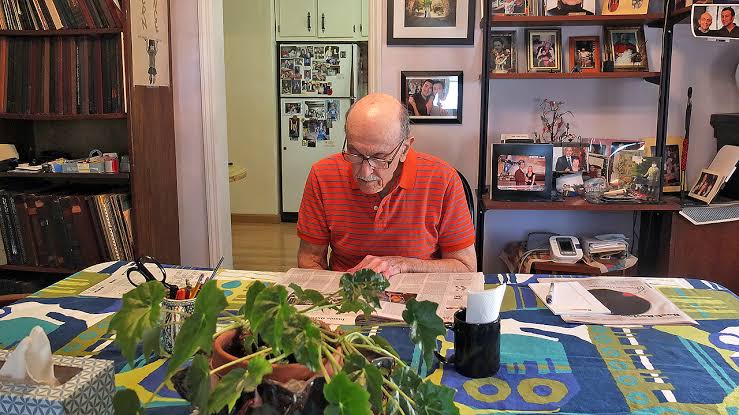
Ask most people to picture a lonely older adult, and the image that comes to mind is often a woman: a widow living alone, perhaps, surrounded by photographs of a fuller life. The reality tells a different story. Older men, not women, consistently report the highest rates of social isolation in the United States, and the consequences reach far beyond hurt feelings. Isolation in older men is linked to higher rates of depression, cognitive decline, cardiovascular disease, and premature death, yet it remains one of the least discussed health risks facing aging Americans.
This article looks at why older men end up isolated more often than older women, why the warning signs are so easy for families to miss, and what actually helps.
The Scope of the Problem
Loneliness among older adults has become significant enough that the U.S. Surgeon General issued a formal advisory on the subject in 2023, describing social disconnection as a public health concern on par with other major risk factors and noting that its health effects are comparable to smoking a pack of cigarettes a day. Within that broader picture, older men consistently show up as one of the highest-risk groups.
Several patterns show up again and again in research on aging and social connection:
- Men are more likely than women to report having few or no close friends in later life.
- Men are less likely to seek out or maintain the kind of regular, low-stakes social contact, phone calls, coffee visits, group activities, that tends to protect against isolation.
- Widowed and divorced older men report higher rates of loneliness than widowed or divorced older women.
- Men are significantly less likely than women to reach out for mental health support, even when they recognize something is wrong.
None of this means women don’t experience loneliness in later life. They do, often significantly. But the data consistently shows that men are less equipped, socially and emotionally, to rebuild connection once it’s lost, which leaves them more vulnerable when a major life change strips away the structures that used to provide it.
Why Men Lose Their Social Networks First
Loneliness in older men rarely arrives suddenly. It tends to build gradually, often traced back to a handful of specific transitions.
Retirement removes a built-in social structure. For many men, work has functioned as their primary source of daily social contact for decades. Coworkers, work friendships, the structure of a workday, all of it disappears at retirement, often without anything built to replace it. Women are statistically more likely to maintain social networks outside of work throughout their careers, which gives them something to fall back on when their job ends. Many men don’t have that same backup structure in place.
Friendship patterns differ significantly by gender. Research on adult friendship consistently finds that men’s friendships tend to be built around shared activities, work, sports, hobbies, rather than the kind of direct emotional check-in that tends to sustain relationships once those shared activities stop. When the activity goes away (the job ends, the golf group stops meeting, health limits the activities that used to bring people together), the friendship built around it often quietly fades with it.
The loss of a spouse hits men differently. In many households, a wife has served as the family’s primary social coordinator, the one who calls the kids, plans visits, remembers birthdays, and maintains friendships on behalf of the household. When she is no longer there, either through death or divorce, that entire social infrastructure often disappears with her, and many men have no established pattern for rebuilding it on their own.
Cultural expectations discourage help-seeking. Many men in the current generation of older adults were raised with strong cultural messaging around self-reliance and emotional restraint. Admitting to loneliness, or actively seeking out new friendships and social opportunities, can feel deeply uncomfortable in a way it often doesn’t for women of the same generation, who are more likely to have practiced this kind of relationship-building throughout their lives.
Physical limitations compound the problem. Mobility issues, hearing loss, vision changes, or no longer being able to drive can each independently shrink a person’s world. For a man who is already socially thin, losing the ability to easily leave the house can be the final piece that tips isolation into full withdrawal.
Why the Health Consequences Are So Serious
Loneliness is not simply an emotional discomfort. It functions as a measurable health risk, and the evidence for this has grown substantially over the past decade.
Chronic loneliness has been associated with increased risk of heart disease, stroke, and high blood pressure, likely tied to the way sustained social stress affects the cardiovascular system over time. It has also been linked to faster cognitive decline and a higher risk of dementia, since regular social engagement appears to help maintain cognitive function in ways that isolated daily routines do not. Depression is significantly more common among isolated older adults, and for older men specifically, that combination of depression and isolation is particularly dangerous. Men over 65 have the highest suicide rate of any demographic group in the country, a statistic that has remained persistently high even as public awareness of mental health has grown elsewhere in society.
Perhaps most striking, several long-term studies have found that chronic loneliness is associated with an increased risk of early death, with some researchers describing the mortality impact as comparable to other well-established risk factors like obesity or physical inactivity. Isolation, in other words, is not just unpleasant. For older men in particular, it behaves like a serious medical risk factor in its own right.
Why Families Often Miss the Signs
If loneliness were obvious, families would act on it sooner. Instead, it tends to hide behind behaviors that look like ordinary aging or a stable, if quiet, personality.
A few reasons the signs get missed:
Men are skilled at projecting “fine.” Decades of cultural conditioning around emotional restraint make many older men very good at sounding steady on a phone call, even when their day-to-day life has become quiet and isolated. A five-minute weekly check-in call rarely surfaces the full picture.
Quiet and lonely can look identical from a distance. A father who has always been reserved doesn’t necessarily raise alarm bells when he seems even quieter than usual, even though that shift may be meaningful.
Withdrawal happens gradually. Skipping one family gathering doesn’t concern anyone. Skipping most of them over the course of a year, without anyone noticing the pattern as it built, is a much bigger signal, but it rarely gets tracked that way in real time.
Adult children are often geographically distant. Many families now live hours or states apart, which limits opportunities to observe daily patterns, like whether Dad is still leaving the house regularly, cooking real meals, or maintaining any of his old routines.
What Actually Helps
The good news is that loneliness in older men, while serious, is genuinely responsive to intervention. Families who take a proactive, low-pressure approach tend to see real improvement.
Build routine before crisis forces it. Waiting for a health scare or a visible decline before addressing isolation means starting from a much harder position. Regular contact, scheduled visits, or structured activities work best when they start early, ideally well before retirement or the loss of a spouse.
Frame connection around activity, not emotion. Given how many men’s friendships were originally built around shared activities, rebuilding social connection through activity, a regular walking group, a hobby class, volunteering, a standing weekly outing, tends to be far more successful than framing it as “making friends” or “talking about feelings,” which can feel unfamiliar or uncomfortable.
Watch the transitions, not just the person. Retirement, the loss of a spouse, a move, or a new health limitation are the moments when isolation risk spikes sharply. Increasing check-ins and support specifically around these transitions, rather than waiting for visible signs of trouble, tends to prevent the slow slide into isolation before it fully takes hold.
Bring in consistent, familiar outside support. For men who are reluctant to seek out new social connections on their own, a steady, recurring presence, whether that’s a regular caregiver, a consistent home-care companion, or a reliable weekly visitor, can provide meaningful social contact without requiring him to build a new friendship from scratch. Consistency matters here more than novelty. The same familiar person showing up on a predictable schedule tends to be far more welcome than a rotating cast of new faces.
Involve him in the plan. Loneliness interventions that are done to someone rather than with them tend to be resisted or quietly abandoned. Asking what he’d actually enjoy, a fishing trip, a standing lunch, help getting to a specific club or event, produces much better buy-in than a generic suggestion to “get out more.”
Fathers and husbands often show this pattern in particular ways, and the signs can be easy to miss if you’re not looking for them. This guide to recognizing when an aging father needs more support walks through those subtler signs and how to start the conversation without it feeling like an intervention.
Frequently Asked Questions
Is loneliness really as dangerous as people say it is?
The research increasingly supports this. Chronic loneliness has been linked to higher rates of heart disease, cognitive decline, depression, and early death. Several studies have compared its health impact to other well-established risk factors like smoking or physical inactivity. It is a genuine health concern, not just an emotional one.
Why don’t older men just ask for help or reach out to friends themselves?
Cultural conditioning plays a significant role. Many men in the current generation of older adults were raised with strong messaging around self-reliance and emotional restraint, which makes both acknowledging loneliness and actively seeking out new social connections feel uncomfortable in ways that tend to differ from how many older women approach the same challenge.
What’s the biggest risk period for social isolation in older men?
Major life transitions tend to be the highest-risk windows: retirement, the loss of a spouse, a significant health decline, or losing the ability to drive. Isolation often builds gradually after one of these events, rather than announcing itself immediately.
How can I tell if my father is lonely if he insists everything is fine?
Look for patterns rather than a single conversation: skipped family events becoming a habit, a shrinking list of regular activities, less enthusiasm about things he used to enjoy, or a home that seems increasingly quiet and understimulated. A single phone call rarely reveals loneliness, since many men are skilled at sounding fine in short conversations.
Does bringing in a caregiver actually help with loneliness, or is it just practical support?
Both. While non-medical home care is often framed around practical tasks, medication reminders, transportation, meal preparation, one of its most meaningful effects for isolated older men is simply providing consistent, predictable social contact. A familiar person showing up on a regular schedule can meaningfully reduce the isolation that builds when someone spends most of their days alone.
Loneliness in older men doesn’t announce itself the way a medical diagnosis does. It builds quietly, often disguised as a naturally quiet personality or an unremarkable daily routine, until the health consequences eventually make it impossible to ignore. Understanding why this pattern is so common among men specifically, and recognizing the transitions that put them most at risk, gives families a real chance to intervene early, before isolation becomes a crisis rather than simply a hard season to move through.