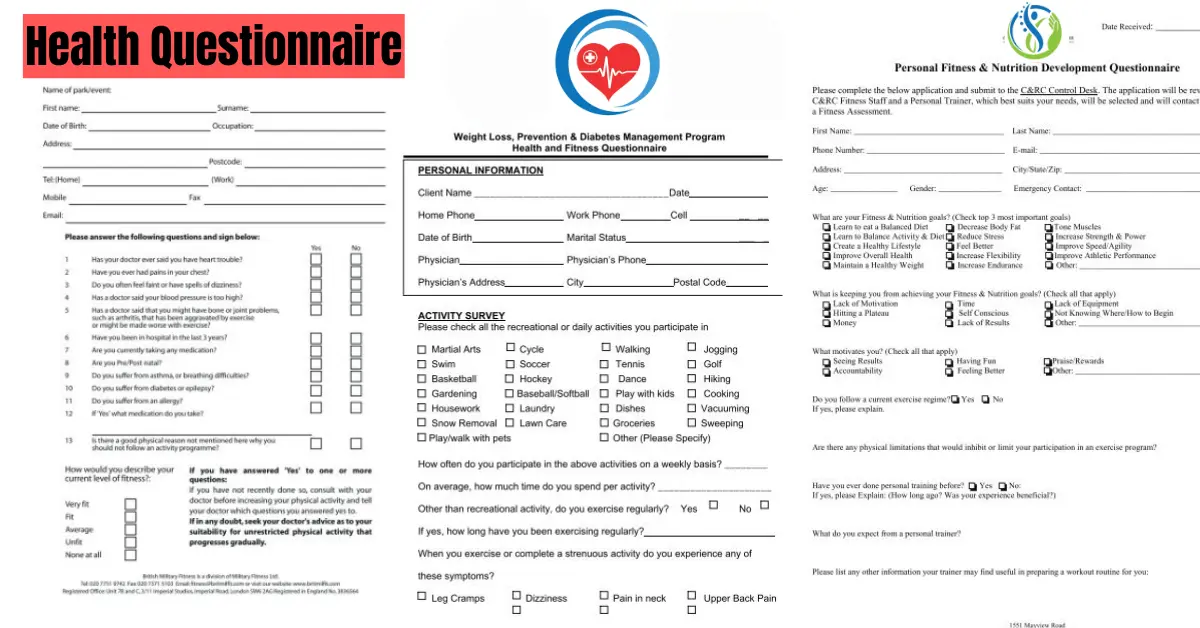
A health questionnaire is a structured form used to collect essential information about an individual’s medical background, lifestyle, and current health status. It typically includes questions about medical history, allergies, medications, and lifestyle habits, helping healthcare professionals or program administrators build a clearer picture of someone’s overall well-being. Whether it appears as a printed form in a clinic or a digital survey online, a health questionnaire serves as an indispensable tool for gathering accurate and relevant health data.
For healthcare providers, a comprehensive health questionnaire or health assessment form streamlines patient intake, enabling quicker, better-informed decisions about diagnosis and treatment. Wellness programs and fitness centers also rely on these forms to customize training or health plans while ensuring safety. In research settings, a medical history questionnaire offers valuable insights for studies and public health initiatives by standardizing data collection. By using these questionnaires effectively, organizations can improve care, track progress, and uphold confidentiality while promoting healthier outcomes.
What Is a Health Questionnaire?
A health questionnaire is a standardized tool designed to gather important details about an individual’s health background, current conditions, and lifestyle factors. Unlike a simple registration form, it focuses on medical and wellness information—everything from allergies and medications to exercise habits and stress levels. This information gives healthcare providers and wellness professionals a more complete understanding of each person’s needs.
While the terms are sometimes used interchangeably, a health questionnaire differs slightly from a health assessment form or a medical history questionnaire. A health questionnaire often emphasizes current health status and risk factors, whereas a medical history questionnaire focuses primarily on past conditions and treatments. Both, however, are essential components of a thorough patient intake process.
In clinics, fitness centers, and workplace wellness programs, health questionnaires act as the first step in screening, risk assessment, and personalized care planning. By collecting consistent and accurate data, they help professionals make informed decisions and deliver better outcomes.
Why Health Questionnaires Are Important

A well-designed health questionnaire plays a critical role in improving care quality and safety. For healthcare providers, it offers an organized way to capture key patient details before consultations, making diagnoses more accurate and treatment plans more tailored. Having a thorough record of medical conditions, allergies, medications, and lifestyle habits also reduces the risk of errors and enhances communication between patient and provider.
In wellness programs and fitness centers, a health assessment form helps trainers or program managers understand participants’ health risks and customize activities safely. It can also highlight early warning signs that might require medical attention.
In research and public health initiatives, standardized medical history questionnaires ensure that data is consistent, comparable, and useful for large-scale studies. This consistency helps researchers track trends, identify risk factors, and design effective interventions.
Ultimately, health questionnaires streamline information gathering, improve decision-making, and contribute to better health outcomes while respecting confidentiality and privacy requirements.
Types of Health Questionnaires

Health questionnaires come in several formats, each designed to collect specific types of information. Choosing the right type depends on the setting and the goals of the assessment.
Medical History Questionnaires
These focus on an individual’s past and current medical conditions, surgeries, medications, and allergies. They give healthcare providers a clear view of a patient’s background before diagnosis or treatment begins.
Lifestyle & Wellness Surveys
Often used in fitness centers, workplaces, or community health programs, these surveys gather information on diet, exercise habits, sleep, and stress. They help tailor wellness plans to individual needs.
Pre-Employment or Occupational Health Screening Forms
Employers and occupational health specialists use these to evaluate whether a candidate is medically fit for a specific role and to identify potential workplace risks.
Patient Intake & Confidential Health Information Forms
These combine demographic details, consent, and health information to streamline onboarding in clinics or hospitals. They’re essential for ensuring privacy, accuracy, and compliance with regulations.
By understanding these different types, organizations can choose or design the questionnaire that best fits their purpose.
Key Components of an Effective Health Questionnaire
An effective health questionnaire is more than a list of random questions — it’s a carefully structured tool that balances thoroughness, clarity, and confidentiality. Including the right components ensures you collect meaningful data without overwhelming the respondent.
Demographic Information
Basic details like name, age, gender, and contact information help identify and categorize responses.
Medical History
This section resembles a medical history questionnaire, covering past illnesses, surgeries, chronic conditions, medications, and allergies. It provides context for current health concerns.
Lifestyle & Wellness Questions
Diet, exercise habits, sleep patterns, and stress levels are crucial for understanding risk factors and designing wellness plans.
Current Symptoms & Health Concerns
A short section for respondents to describe any ongoing issues or complaints gives providers insight into immediate priorities.
Consent & Confidential Health Information
Clear consent statements and privacy notices reassure respondents that their information will be handled securely and in compliance with relevant regulations.
By including these elements, a health assessment form becomes a practical, user-friendly tool for gathering high-quality information.
How to Create a Health Questionnaire
Designing an effective health questionnaire involves more than compiling questions — it requires clarity, relevance, and privacy safeguards. A well-structured form not only improves response rates but also ensures you collect accurate, actionable information.
Define Your Purpose
Clarify why you’re creating the questionnaire. Is it for patient intake, a workplace wellness program, or research? Knowing the goal will guide what you include.
Choose the Right Format
Decide between a paper form and a digital version. Online platforms and apps can make it easier to distribute, collect, and store data securely.
Organize Questions Logically
Group questions into sections such as demographic details, medical history, lifestyle factors, and current concerns. This makes the form easy to follow.
Keep It Clear and Concise
Use plain language and avoid unnecessary jargon so respondents understand what’s being asked.
Address Privacy and Consent
Include statements about how confidential health information will be stored and used. Compliance with HIPAA or other data protection laws is crucial.
By following these steps, your health assessment form or medical history questionnaire will be easier to complete and more reliable for decision-making.
Sample Questions for a Health Questionnaire
The exact questions you include in a health questionnaire depend on your purpose, but structuring them by category keeps the form organized and easy to complete. Below are some examples of non-sensitive, commonly used questions:
Demographic Information
- What is your age?
- What is your gender?
- Do you have a primary care physician?
Medical History (similar to a medical history questionnaire)
- Have you ever been diagnosed with any chronic conditions?
- Are you currently taking any prescribed medications?
- Do you have any known allergies?
Lifestyle & Wellness
- How many days per week do you engage in physical activity?
- How would you describe your typical diet?
- How many hours of sleep do you get on average per night?
Current Health Concerns
- Are you experiencing any symptoms you’d like to discuss?
- When was your last medical check-up?
Consent & Confidentiality
- Do you consent to your information being used for care planning in accordance with privacy laws?
Including clear, straightforward questions like these makes your health assessment form easy to understand and more likely to yield accurate, useful responses.
Digital vs. Paper Health Questionnaires
When creating a health questionnaire, one of the first decisions is whether to deliver it on paper or in a digital format. Both options have advantages and challenges depending on your audience and purpose.
Digital Health Questionnaires
- Advantages: Quick distribution via email or apps, automatic data entry, easier analysis, and stronger options for securing confidential health information. They’re ideal for busy clinics, workplace wellness programs, and large-scale research.
- Challenges: Requires internet access and some digital literacy; may need secure platforms to comply with privacy laws.
Paper Health Questionnaires
- Advantages: Familiar to many people, especially those without digital access; can be filled out in waiting rooms or during face-to-face visits.
- Challenges: Manual data entry increases the chance of errors, storage requires space, and handling confidential data securely can be harder.
Many organizations use a hybrid approach — offering a digital health assessment form for convenience and keeping paper copies for those who prefer them.
Best Practices & Legal Considerations
Creating and managing a health questionnaire isn’t just about collecting data — it’s also about protecting respondents and using their information responsibly. Following best practices and legal requirements helps build trust and ensures compliance.
- Prioritize Privacy and Security
Clearly explain how confidential health information will be stored, who will have access, and how long it will be kept. Use secure digital platforms or locked storage for paper forms. - Obtain Informed Consent
Include a section where respondents agree to the collection and use of their data for the stated purpose. This is especially important for research or workplace wellness programs. - Comply With Laws and Regulations
Make sure your form meets relevant privacy laws (such as HIPAA in the U.S. or GDPR in the EU). These regulations govern how health data can be collected, stored, and shared. - Keep Language Clear and Inclusive
Write questions in plain, respectful language and offer options that reflect diverse identities and experiences.
By following these principles, your health assessment form or medical history questionnaire becomes not only an effective tool but also a trustworthy one.
Conclusion
A well-designed health questionnaire is far more than a routine form — it’s a practical tool for gathering accurate, consistent, and confidential information that can significantly improve care and outcomes. Whether it’s a simple medical history questionnaire for patient intake, a workplace health assessment form for wellness programs, or a research survey, these tools help professionals understand individual needs and make informed decisions.
By including the right components, presenting questions clearly, and safeguarding privacy, organizations can create questionnaires that encourage honest, complete responses. As healthcare and wellness increasingly move online, adopting secure digital formats can make the process even more efficient.
Ultimately, an effective health questionnaire streamlines information collection, strengthens patient–provider relationships, and contributes to better planning, safer interventions, and healthier communities.