Australia’s government has committed funding toward developing a Roadmap for a National Targeted Skin Cancer Screening Program, led by the Melanoma Institute Australia with data support from the Australian Institute of Health and Welfare. It’s a significant shift: for the first time, skin cancer detection in Australia is moving from “see your GP if you’re worried” toward a structured, risk-based screening system, similar in principle to how breast or bowel screening already works.
For Sydney residents, this raises an obvious question: does this mean I should wait for the official program before booking a check, or act now? Here’s a practical breakdown.
Step 1: Understand what the roadmap actually is (and isn’t)
The roadmap is a planning framework, not a rollout you can enrol in today. It’s designed to identify who is at highest risk and target screening resources where they’ll save the most lives, rather than a blanket national screening day for every adult. Until it’s implemented, existing dermatology services remain the primary route to early detection.
Step 2: Check where you sit on the risk spectrum
Risk factors the future program is likely to weight heavily include:
- Fair skin, light eyes, or a tendency to burn rather than tan
- A personal or family history of melanoma or other skin cancers
- Significant cumulative sun exposure, including outdoor work or sport
- A history of severe sunburn, particularly before age 20
- Large numbers of moles or a history of atypical moles
If two or more of these apply to you, waiting for a future government program isn’t a good strategy. Book a professional skin check now.
Step 3: Know the difference between a self-check and a clinical check
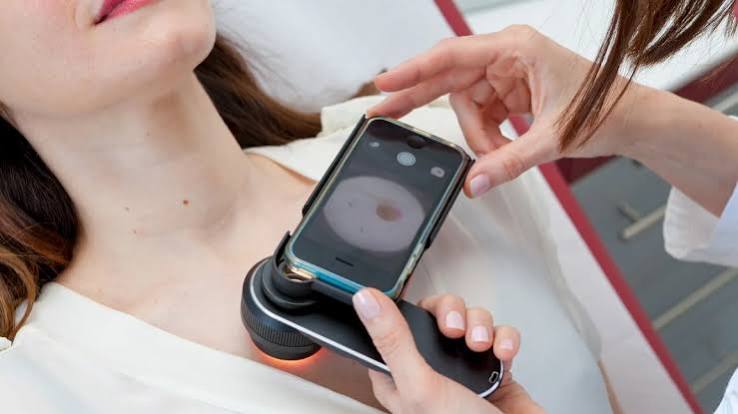
Self-examination is genuinely useful for noticing new or changing spots between appointments, but it isn’t a substitute for dermoscopy, the magnified examination technique clinicians use to assess pigment patterns and borders in detail. Booking dermatology sydney residents can access easily is still the fastest way to get that level of detail, and Sydney has no shortage of clinics offering it as a standard service.
Step 4: Get a baseline, not just a one-off
A single skin check tells a clinician what your skin looks like today. A baseline, ideally with mole mapping or photography, gives them something to measure future change against. This is particularly valuable if you have many moles or a family history, since “has this changed?” is a far easier question to answer with a reference point.
Step 5: Put a realistic interval in the calendar
Once you’ve had a baseline check, most people benefit from an annual review, with shorter intervals for higher-risk individuals. Set a reminder now rather than relying on remembering.
Where public policy is heading vs what you can do today
| Focus | National screening roadmap (future) | What’s available in Sydney now |
| Scope | Targeted at high-risk groups nationally | Available to anyone, any risk level |
| Timeline | Still in development phase | Bookable this week |
| Method | Not yet finalised | Established dermoscopic examination |
| Cost | To be determined | Many consultations attract Medicare rebates |
| Best for | Long-term systemic risk reduction | Individual peace of mind and early detection now |
FAQs
Should I wait for the national program instead of booking a private check? No. The roadmap is still in the development stage, with no confirmed public rollout date. If you have any risk factors, a check now is the safer path.
Will the future program replace clinics like dermatology practices in Sydney? Unlikely. Government screening programs typically work alongside existing specialist services rather than replacing them, referring higher-risk patients into the same clinical pathways that already exist.
How is a targeted program different from screening everyone? Targeted screening focuses resources on people statistically most likely to benefit, based on risk factors, rather than screening the entire population at the same interval.
What’s the single most useful thing I can do this month? Book a baseline skin check with mole mapping if you haven’t already had one. It’s the foundation every future comparison, whether via a national program or a private clinic, will rely on.
The bottom line
The bottom line: Policy takes years to become practical. Your skin doesn’t wait for either. If any of the risk factors above sound familiar, the sensible move is a proper assessment now, not a wait-and-see approach for a program that’s still on the drawing board.