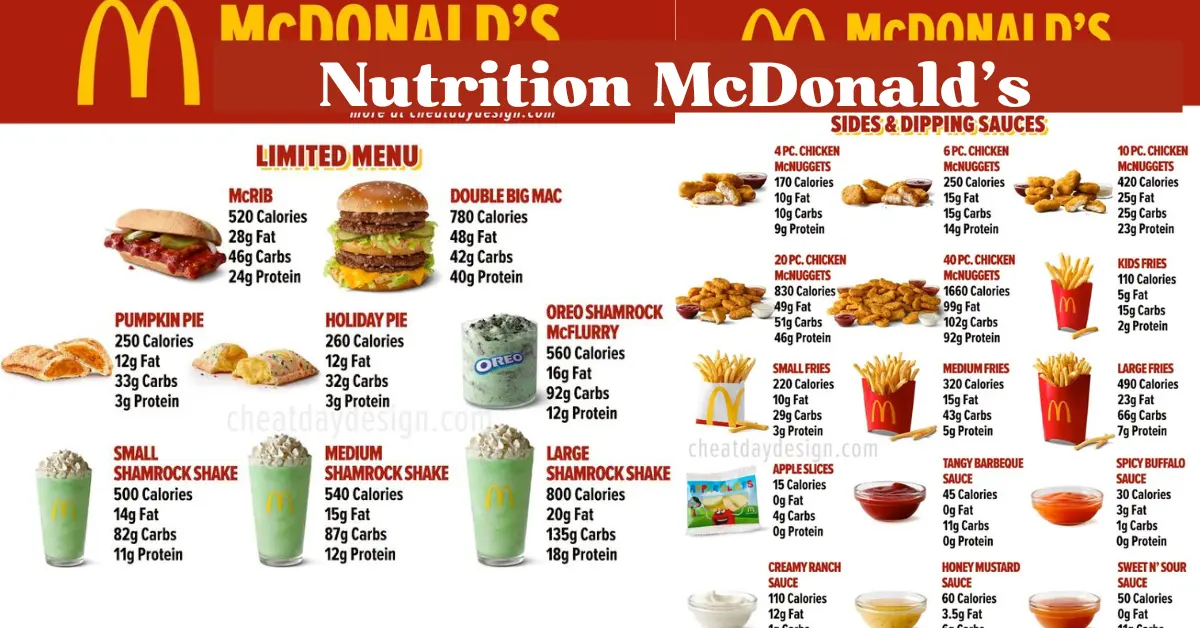
Introduction
McDonald’s is one of the most iconic and widely recognized fast food chains in the world, serving millions of customers every day across the globe. With its quick service, affordable prices, and familiar menu, it’s no surprise that McDonald’s is often the go-to choice for people on the move. But with growing awareness around health and fitness, many are now asking: Can you actually eat healthy at McDonald’s?
The answer isn’t as straightforward as a simple yes or no. While McDonald’s is known for its indulgent burgers and fries, it also offers a variety of menu items that can fit into a balanced diet — if you know what to look for. That’s why understanding nutrition at McDonald’s is essential before placing your order. Whether you’re counting calories or watching sodium, making informed choices can help you enjoy your meal without the guilt.
What You Need to Know
Before diving into specific menu items, it’s important to understand how nutrition works at McDonald’s. Like most fast food chains, McDonald’s offers a wide range of options — some high in calories, sodium, and saturated fat, and others that are lighter and more diet-friendly. The key is knowing how to navigate the menu and use the available nutrition information to your advantage.
McDonald’s provides detailed nutrition facts for every item on its menu, both in-store and online. You can access this information through their website, mobile app, or even printed materials at some locations. This makes it easier to compare meals, track calorie intake, and avoid hidden ingredients that might not align with your health goals.
By reviewing the McDonald’s menu nutrition in advance, you can make smarter decisions that fit your dietary needs—whether you’re watching your weight, managing a medical condition, or simply trying to eat healthier on the go.
Healthiest McDonald’s Menu Items (Under 500 Calories)
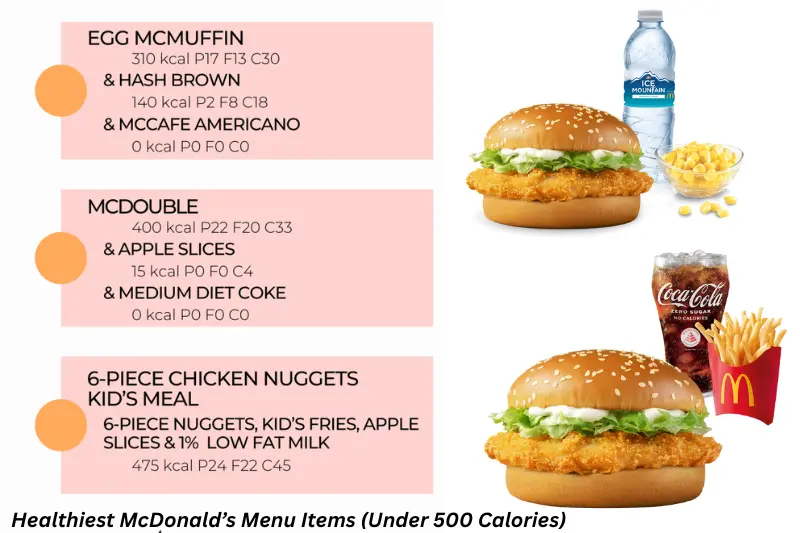
Eating at McDonald’s doesn’t mean you have to throw your health goals out the window. In fact, there are several menu options that are both satisfying and under 500 calories — ideal for anyone watching their calorie intake or trying to eat more mindfully.
Here are some of the healthiest McDonald’s options to consider:
Egg McMuffin – 310 calories
A classic breakfast item that offers a good balance of protein and carbs. Made with a real egg, Canadian bacon, and English muffin — it’s a surprisingly smart choice.
Side Salad with Low-Fat Balsamic Vinaigrette – 60 calories
Skip the fries and choose this light and refreshing side. It adds fiber and nutrients without piling on calories.
4-Piece Chicken McNuggets – 170 calories
When portion-controlled, even McNuggets can be a lower-calorie option — especially if you skip the sauces.
Apple Slices – 15 calories
A kid-friendly side that’s perfect for a quick, healthy snack.
Black Coffee or Unsweetened Iced Tea – 0 calories
A zero-calorie beverage that helps you avoid the sugar spike from sodas and milkshakes.
Choosing from these low calorie McDonald’s items can help you stay on track without sacrificing convenience or flavor. Just be mindful of extras like sauces, cheese, and sugary drinks, which can quickly add up.
McDonald’s Calories Breakdown by Category
To make smarter choices at McDonald’s, it helps to understand how the calories stack up across different parts of the menu. Whether you’re ordering a burger, a side, or a dessert, some items are more calorie-dense than others. Here’s a quick overview of popular categories using average calorie values to guide your decision-making.
Burgers & Sandwiches
McDonald’s burgers vary widely in calorie content depending on size and toppings.
- Hamburger – 250 calories
- Cheeseburger – 300 calories
- Big Mac – 550 calories
- McChicken – 400 calories
- Filet-O-Fish – 380 calories
Tip: Skip the cheese or sauce to reduce calories. You can also ask for extra lettuce or tomato to bulk it up without the extra calories.
Sides & Snacks
These can add a lot of calories quickly if you’re not careful.
- Small Fries – 230 calories
- Medium Fries – 320 calories
- 6-Piece Chicken McNuggets – 250 calories
- Mozzarella Sticks (3 pc) – 280 calories
Choose smaller portions or pair with a salad to balance your meal.
Beverages
Sugary drinks can be the sneakiest calorie bombs on the menu.
- Small Coca-Cola – 150 calories
- Large Coca-Cola – 290 calories
- Vanilla Shake (Small) – 510 calories
- Sweet Tea (Medium) – 100 calories
- Black Coffee – 0 calories
Choose water, black coffee, or unsweetened iced tea for a low-calorie option.
Desserts
Delicious, but often high in sugar and calories.
- Apple Pie – 230 calories
- Vanilla Cone – 200 calories
- Hot Fudge Sundae – 330 calories
- McFlurry with M&M’s (Snack Size) – 430 calories
Treats are okay in moderation—try splitting dessert or opting for a smaller size.
Having a basic understanding of the McDonald’s calorie chart helps you customize your order and stay within your nutritional goals. Awareness is the first step to making better choices, even at a fast-food counter.
How to Make Healthier Choices at McDonald’s
You don’t have to give up fast food entirely to eat well — it’s all about making smarter decisions. McDonald’s offers flexibility in how you order, and a few small adjustments can make a big difference in your meal’s overall nutrition.
Here are some practical tips to help you choose the best healthy food at McDonald’s:
Go Grilled, Not Fried
Whenever possible, choose grilled options instead of fried. For example, a Grilled Chicken Sandwich has fewer calories and less fat than its crispy counterpart.
Customize Your Order
Ask for no mayo, light cheese, or skip sauces altogether to cut unnecessary calories and saturated fat. Add extra lettuce, tomato, or onions to boost fiber and nutrients.
Watch Your Portion Sizes
Opt for small or regular sizes instead of supersized versions. A small fries and drink can satisfy cravings without going overboard on calories.
Choose Smarter Sides
Replace fries with apple slices, a side salad, or even a plain yogurt (when available) to reduce calorie load and increase nutritional value.
Be Mindful of Beverages
Drinks like soda and shakes add hundreds of calories. Stick to water, black coffee, or unsweetened iced tea to stay hydrated without added sugar.
By following these simple strategies, you can enjoy the convenience of McDonald’s while still maintaining a balanced diet. Understanding your options and taking control of how you order can make fast food fit better into your lifestyle.
Nutrition Tips for Special Diets (Keto, Low-Carb, Vegetarian)
If you’re following a specific diet, eating at McDonald’s can feel limiting — but with a little creativity and customization, it’s possible to stick to your plan without straying too far from your goals. Here’s how to approach the McDonald’s diet options for different dietary needs:
Keto & Low-Carb Diets
Keto eaters focus on high fat, moderate protein, and low carbs — which means avoiding bread, fries, and sugary sauces.
Tips:
- Order burgers or sandwiches without the bun (ask for lettuce wrap or eat with a knife and fork)
- Choose Egg McMuffin without the muffin for a low-carb breakfast option
- Avoid ketchup and sweet sauces; stick with mustard or mayonnaise in small amounts
Keto-friendly picks:
- Bunless Double Cheeseburger
- Sausage McMuffin (no muffin)
- Side of Bacon or Egg
Vegetarian Options
While McDonald’s is traditionally meat-heavy, there are a few plant-based choices depending on location.
Tips:
- Choose Side Salad, Apple Slices, or Fruit & Maple Oatmeal (note: oatmeal contains dairy)
- Ask if McPlant or other plant-based burgers are available (currently limited to select markets)
- Egg-based items like the Egg McMuffin (no meat) can work for ovo-vegetarians
Vegetarian-friendly picks:
- Fruit & Maple Oatmeal
- Egg & Cheese McMuffin
- Side Salad with Balsamic Vinaigrette
Low-Calorie or Weight Loss Diets
If you’re watching your calories, portion control and smart substitutions are key.
Tips:
- Stick to items under 400–500 calories
- Avoid creamy dressings, extra cheese, and fried sides
- Check the official McDonald’s nutrition facts for precise calorie counts
Low-calorie picks:
- Hamburger (250 cal)
- 4-piece McNuggets (170 cal)
- Side Salad with dressing (60–100 cal)
Whatever diet you follow, planning ahead and knowing what to order can help you stay on track — even at a fast-food restaurant. Use McDonald’s nutrition calculator online or in their app to preview meals before you order.
Conclusion
Eating at McDonald’s doesn’t have to mean sacrificing your health goals. With the right knowledge and a little planning, it’s entirely possible to make better choices—even at a fast-food counter. From low-calorie options to diet-specific modifications, McDonald’s offers more flexibility than many people realize.
By understanding nutrition at McDonald’s, you can approach the menu with confidence, whether you’re counting calories, managing carbs, or simply trying to eat a little cleaner while on the go. Using tools like the official nutrition calculator or mobile app can further help you stay informed and in control.
Fast food will never replace whole, home-cooked meals in terms of nutrition—but when convenience is key, making smarter picks at McDonald’s can help you stay on track without the guilt.