
The Rise of Non-Surgical Cosmetic Injections
Non-surgical cosmetic injections, particularly neuromodulators like onabotulinumtoxinA (commonly known as Botox Cosmetic), have revolutionized how we address visible signs of aging. These treatments offer a sophisticated, minimally invasive approach to facial rejuvenation, focusing on dynamic wrinkles—those lines that appear when we make facial expressions. For forehead lines, the primary target is the frontalis muscle, responsible for raising the eyebrows. By strategically relaxing this muscle, we can achieve a smoother, more youthful appearance without the need for surgery.
Anatomy of Upper Facial Wrinkles
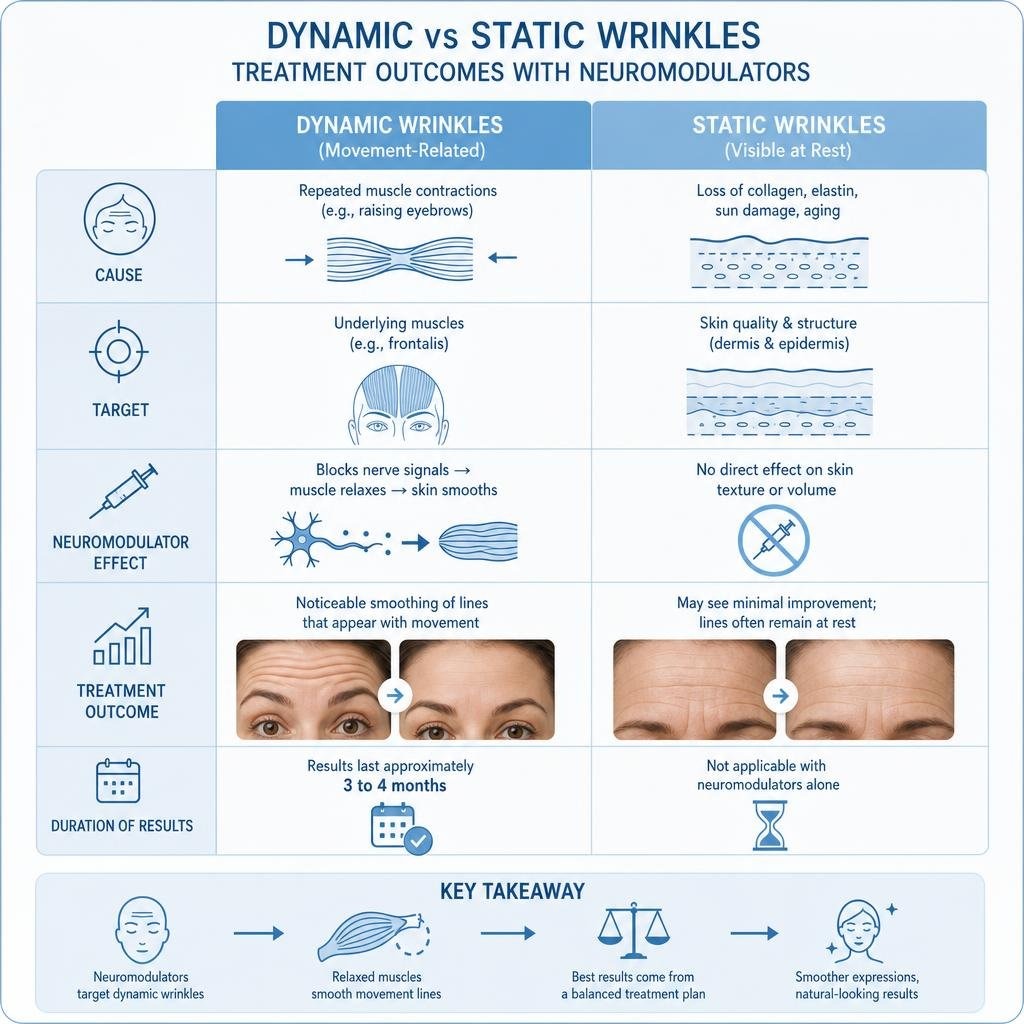
The human face is a complex network of muscles, each contributing to our expressions. Horizontal forehead lines are primarily formed by the repeated contraction of the frontalis muscle as we raise our eyebrows in surprise, contemplation, or emphasis. Over time, these dynamic lines, initially visible only during movement, can become permanently etched into the skin, turning into static lines that are present even at rest.
Another crucial area in the upper face is the glabellar complex, located between the eyebrows. This complex comprises the corrugator and procerus muscles, which are responsible for frowning and creating the “11” lines. The frontalis and glabellar muscles work in opposition; the frontalis lifts the brow, while the glabellar complex pulls it down. Understanding this interplay is vital for achieving balanced and natural-looking results. While neuromodulators effectively target dynamic wrinkles, fine lines caused by collagen depletion or sun damage, often referred to as static wrinkles, may require additional treatments as neuromodulators do not directly address skin texture or volume loss.
Neuromuscular Blockade Mechanism
The effectiveness of neuromodulators stems from their unique mechanism of action. OnabotulinumtoxinA, the active ingredient in Botox Cosmetic, is a purified protein that acts as an acetylcholine release inhibitor and a neuromuscular blocking agent. When injected into a specific muscle, it temporarily blocks the nerve signals that tell the muscle to contract. This process is known as chemical denervation.
By interrupting this communication, the targeted muscle relaxes, and the overlying skin smooths out. For forehead lines, this means the frontalis muscle’s ability to contract is reduced, leading to a decrease in the appearance of horizontal wrinkles. The effects are localized and temporary, ensuring that other facial muscles remain unaffected and facial expressions are preserved, albeit softened. This precise action allows for targeted treatment with predictable results.
Upper Facial Treatment Protocols and Clinical Standards
Administering neuromodulators for forehead lines requires a deep understanding of facial anatomy and a meticulous approach to injection technique. A comprehensive facial assessment is paramount, involving careful palpation of the muscles at rest and during maximum expression to identify the precise areas of muscle activity. This assessment helps determine the optimal injection points and dosage, ensuring both efficacy and patient safety. Anatomical landmarks, such as the supraorbital ridge and the temporal fusion line, serve as crucial guides to prevent complications and achieve harmonious results. While standard protocols exist, skilled practitioners may also employ micro-dosing concepts to deliver highly individualized and nuanced outcomes.
Dosing Standards for Non-Surgical Cosmetic Injections
For treating forehead lines, the recommended dosage of Botox Cosmetic is 20 Units, strategically divided into 5 injection sites within the frontalis muscle, with 4 Units administered per site. However, it is a critical clinical standard that forehead lines are treated in conjunction with glabellar lines, which also typically receive 20 Units. This combined treatment totals 40 Units and is essential for balancing muscle dynamics in the upper face.
When treating the frontalis muscle, injections are carefully placed, ensuring that the lower row of injection sites is at least 2 cm above the eyebrow. This precise placement, along with positioning injections 0.5 to 1.5 cm medial to the temporal fusion line, helps mitigate the risk of brow ptosis (drooping of the eyebrow). The goal is to achieve a natural-looking softening of wrinkles while preserving appropriate eyebrow movement. For those exploring the full range of benefits and procedures involved in non-surgical cosmetic injections, detailed information is available.
Balancing Muscle Dynamics to Prevent Complications

The importance of treating forehead lines and glabellar lines concurrently cannot be overstated. The frontalis muscle, which lifts the eyebrows, and the corrugator and procerus muscles of the glabellar complex, which pull them down, are antagonist muscles. If only the frontalis muscle is treated, the unopposed action of the glabellar muscles can lead to an undesirable brow heaviness or even brow ptosis, where the eyebrows appear to droop.
By injecting neuromodulators into both the frontalis and the glabellar complex simultaneously, practitioners can achieve a balanced reduction in muscle activity across the upper face. This approach not only smooths both horizontal forehead lines and vertical frown lines but also helps maintain the natural position and arch of the eyebrows, preventing an unnatural or “frozen” appearance. This careful consideration of muscle dynamics is a cornerstone of safe and aesthetically pleasing results.
Clinical Efficacy, Safety Profiles, and Candidacy
Neuromodulators have demonstrated significant clinical efficacy in treating forehead lines. In clinical studies, a notable 61% of subjects achieved a composite ≥2-grade improvement from baseline in forehead line severity at maximum eyebrow elevation at Day 30 with Botox Cosmetic (20 Units for forehead lines combined with 20 Units for glabellar lines). This indicates a high rate of positive response, making it a highly effective treatment for dynamic forehead wrinkles. The onset of chemical denervation typically occurs within 1 to 2 days following intramuscular injection, with the full effects usually peaking within the first week. While effective across various age groups, responder rates for forehead lines treatment appeared to be higher for subjects younger than age 65 compared to those 65 years or older.
Expected Longevity and Treatment Cycles
The effects of neuromodulators for forehead lines are temporary, typically lasting approximately 3 to 4 months. Several factors can influence this duration. Individual metabolic rates play a significant role; individuals with faster metabolisms may find the effects wear off more quickly. High levels of physical activity or strong facial expressiveness can also contribute to a shorter duration of effect, sometimes closer to three months.
To maintain optimal results, re-treatment is necessary. However, it’s crucial to adhere to recommended treatment intervals. Clinical safety and efficacy for re-dosing more frequently than every 3 months have not been established. Regular, appropriately spaced treatment cycles are key to long-term prevention of dynamic lines from becoming static and to sustaining a smoother appearance.
Safety Data and Adverse Effect Management
While generally safe, neuromodulator treatments are not without potential side effects. According to clinical studies, the most common adverse reaction for forehead lines treatment is headache, occurring in 9% of subjects treated with Botox Cosmetic. Other reported side effects include brow ptosis (drooping of the eyebrow) in 2% of subjects and eyelid ptosis (drooping of the eyelid) also in 2% of subjects. Skin tightness was also reported in 2% of cases.
A significant safety consideration is the “Boxed Warning” issued by the FDA for all botulinum toxin products, which highlights the potential for distant spread of toxin effect. While rare, this means the effects of the toxin could spread from the injection site to other areas, causing symptoms consistent with botulism, such as muscle weakness, vision problems, or difficulty breathing. This underscores the critical importance of selecting a qualified, experienced, and board-certified medical professional for any neuromodulator treatment. These practitioners possess the anatomical knowledge and injection techniques necessary to minimize risks and manage any potential adverse reactions effectively.
Patient Experience and Procedural Protocols
Undergoing neuromodulator injections for forehead lines is typically a quick and relatively comfortable experience. Before the procedure, many practitioners may apply a topical anesthetic cream to the treatment area to minimize discomfort. During the injections, patients might feel a slight pinch or pressure. Some individuals have described the sensation as a subtle “crunching boots on snow” sound as the fluid enters the skin, though this is often more noticeable with deeper injections. The entire session, including preparation and injections, usually takes only 10 to 20 minutes, making it a convenient option for those with busy schedules.
The process begins with a thorough consultation. This initial discussion is crucial for evaluating candidacy, understanding patient expectations, and reviewing medical history. It’s an opportunity for the patient to ask questions and for the practitioner to explain the procedure, potential outcomes, and any risks.
Preparing for Non-Surgical Cosmetic Injections

Proper preparation is essential for a smooth and effective neuromodulator treatment. During the consultation, it is vital to provide a complete medical history, including any pre-existing neuromuscular disorders (such as myasthenia gravis or Lambert-Eaton syndrome), allergies, or current medications. Patients should inform their provider about any prescription drugs, over-the-counter medications, vitamins, and herbal supplements they are taking, particularly blood thinners like aspirin, ibuprofen, or certain herbal remedies, as these can increase the risk of bruising.
To further minimize bruising and swelling, it is generally recommended to avoid alcohol consumption for at least 24 hours prior to the treatment. Following these preparatory guidelines helps ensure the safest possible experience and optimal results.
Post-Treatment Recovery and Aftercare Guidelines
Following neuromodulator injections, adherence to specific aftercare instructions is crucial to optimize results and minimize potential side effects.

Here are the essential post-injection rules:
- Stay Upright: For at least four hours immediately after the procedure, remain upright and avoid lying down or bending forward excessively. This helps prevent the neuromodulator from migrating to unintended areas.
- Avoid Pressure and Rubbing: Do not rub, massage, or apply undue pressure to the treated areas for at least 24 hours. This also helps prevent the product from spreading.
- Limit Strenuous Activity: Refrain from vigorous exercise, heavy lifting, or any activities that significantly increase blood flow to the face for 24 to 48 hours. Increased blood flow can potentially diffuse the neuromodulator and reduce its effectiveness or increase bruising.
- Avoid Blood Thinners: Continue to avoid blood-thinning medications (unless medically necessary and approved by your doctor) for several hours post-treatment to further reduce the risk of bruising.
- Observe and Report: Pay attention to your body and report any unusual or severe side effects to your practitioner promptly.
By diligently following these guidelines, patients can enhance the safety and effectiveness of their treatment, contributing to more predictable and satisfactory outcomes.
Frequently Asked Questions About Facial Neuromodulators
How long do results typically last on the forehead?
The effects of neuromodulators on forehead lines typically last between three and four months. However, this can vary based on several factors, including an individual’s metabolism, the strength of their facial muscles, and their level of physical activity or facial expressiveness. Patients who are highly expressive or engage in intense physical exercise frequently may find the effects wear off closer to the three-month mark. To maintain the desired smooth appearance, follow-up treatments are usually scheduled every three to four months.
Can neuromodulator injections treat deep static forehead lines?
Neuromodulators are most effective at treating dynamic wrinkles—those that appear with muscle movement. While they can significantly soften existing deep static forehead lines by preventing the underlying muscle contractions that deepen them, they do not completely erase lines that are already etched into the skin at rest. For very deep static lines, a combination approach may be recommended, potentially including dermal fillers to fill the crease or skin resurfacing treatments to improve skin texture. However, using neuromodulators preventatively can significantly slow the progression of dynamic lines into static ones.
What are the main precautions to follow immediately after treatment?
Immediately after neuromodulator injections, there are a few key precautions to observe. It is crucial to remain upright and avoid lying down or bending over for at least four hours. Patients should also refrain from rubbing, massaging, or applying pressure to the treated area for at least 24 hours to prevent the product from migrating. Additionally, strenuous exercise, heavy lifting, or any activity that significantly increases heart rate and blood flow to the face should be avoided for 24 to 48 hours. These measures help ensure the neuromodulator settles correctly in the targeted muscles and minimizes the risk of unwanted side effects like bruising or product diffusion.
Conclusion
The landscape of aesthetic medicine continues to evolve, with non-surgical cosmetic injections standing out as a cornerstone of modern facial rejuvenation. For those seeking to address forehead lines, neuromodulators offer a highly effective, minimally invasive solution that can significantly smooth dynamic wrinkles and contribute to a more refreshed and youthful appearance. Understanding the intricate anatomy of the upper face, the precise mechanism of action of these injections, and the rigorous clinical protocols involved is essential for both practitioners and patients.
The commitment to balancing muscle dynamics, adhering to recommended dosing standards, and following crucial pre- and post-treatment guidelines ensures not only the efficacy of the treatment but also the safety and natural-looking results that patients desire. With advancements in clinical expertise and a clear understanding of patient experience, neuromodulators for forehead lines continue to be a leading choice for individuals seeking to enhance their aesthetic without surgical intervention.