Most first aid advice assumes help is a phone call away. Survival first aid starts from a different assumption: that professional medical care might be hours, days, or even longer out of reach, whether because of a natural disaster, a remote location, or a broader emergency affecting access to normal services. That shift in assumptions changes what actually matters most.
This guide covers the priorities that matter when you’re genuinely on your own for medical care, and the honest limits of what home treatment can and can’t handle.
Start With the Basics That Actually Kill People
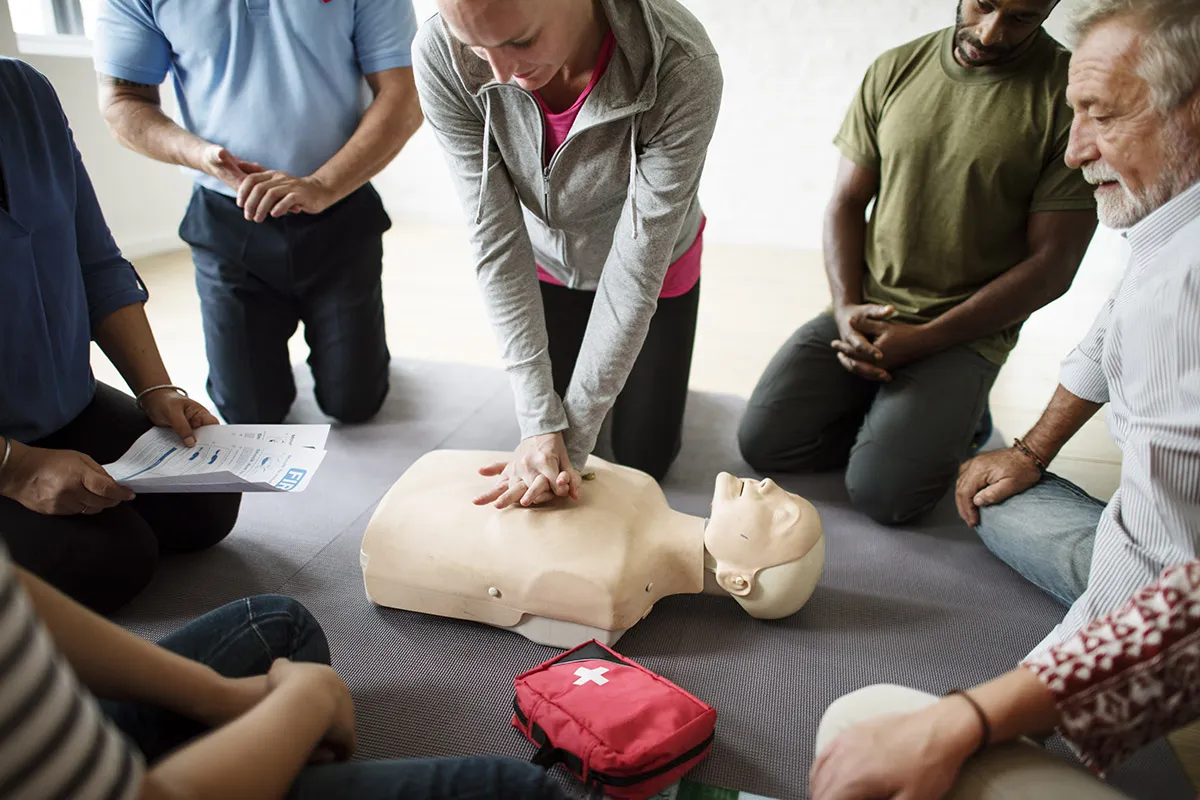
In a true emergency, airway, breathing, and severe bleeding take priority over everything else, since these are the problems that turn fatal within minutes rather than hours or days. Learning to control severe bleeding with direct pressure, and knowing basic CPR, matters more than any item you could pack in a kit. No amount of gear substitutes for that knowledge.
This priority order exists for a simple reason: the human body can tolerate a surprising range of problems for hours or days, but it has almost no tolerance for an obstructed airway or uncontrolled major bleeding. A broken bone, while it looks and feels dramatic, rarely kills anyone on its own. A person who stops breathing or loses blood volume rapidly can die within minutes. Keeping that hierarchy straight in your head is what allows you to correctly prioritize when there are multiple injuries competing for attention at once. This mental checklist takes only seconds to run through, but it consistently separates people who respond effectively under real pressure from those who freeze or focus on the wrong problem first.
Wound Care Without a Hospital Nearby
● Clean every wound thoroughly with the cleanest water available, since contamination is the single biggest driver of later complications
● Remove any visible debris carefully, using clean tweezers if available
● Cover with a clean dressing and change it regularly, watching closely for the early signs of infection
● Immobilize suspected fractures with a splint, keeping the joints above and below the injury stable
The Infection Risk You Can’t Ignore
Without quick access to medical care, a minor wound has more room to turn into a genuine problem before anyone catches it. This is exactly the scenario where some people choose to keep a course of antibiotics on hand as part of a broader preparedness plan, treating it the way they’d treat any other emergency supply they hope never to actually need.
If that describes your own planning, it’s worth understanding does amoxicillin expire and how storage conditions affect that timeline, since an emergency antibiotic supply is only useful if it still works when you actually need it. This is a conversation worth having directly with a doctor ahead of time, not something to figure out in the middle of an actual emergency.
Recognizing Shock Before It Becomes Critical
Shock can develop after any significant injury, and it’s often more immediately dangerous than the original wound itself. Pale, cool, clammy skin, a rapid or weak pulse, confusion, and general weakness are all warning signs worth watching for closely. Laying the person down, elevating their legs if there’s no suspected spinal injury, and keeping them warm are the basic steps that can genuinely buy time until further help is available.
Shock doesn’t always look dramatic in its early stages, which is exactly why it catches people off guard. Someone can seem reasonably alert and talking normally while their body is already struggling to maintain adequate blood flow to vital organs. Checking in periodically, watching for a change in mental clarity or a pulse that feels faster and weaker than it did a few minutes earlier, helps catch this progression before it becomes a much harder problem to manage.
Knowing the Limits of Home Treatment
Survival first aid is about stabilizing a situation and buying time, not replacing what a hospital or clinic can do. Deep wounds, suspected internal injuries, severe burns, and anything involving difficulty breathing all warrant getting to real medical care as quickly as humanly possible, even if that means a difficult journey. Home treatment exists to keep someone stable enough to survive that journey, not to be the final answer.
When to Prioritize Evacuation Over Waiting
● Any wound that won’t stop bleeding despite direct pressure
● Signs of shock: pale, clammy skin, rapid pulse, confusion, or weakness
● A fever that keeps climbing despite home treatment
● Any injury involving the head, chest, or abdomen, even if it initially seems minor
Communication and Getting Help Started Early
If any means of communication is available, whether a cell signal, a satellite messenger, or simply someone who can physically travel to get help, start that process as early as possible rather than waiting to see how the situation develops. Evacuation and outside help often take far longer to arrange than people expect, so the earlier that clock starts, the better positioned everyone is, even if the injury ultimately turns out to be manageable without it.
Assembling a Survival-Specific Medical Kit
A survival first aid kit needs to go further than a standard household kit, since it’s built around the assumption of delayed access to care rather than a quick trip to urgent care. Beyond the usual bandages and antiseptic, think about what you’d need to manage an injury for several days rather than several hours.
● A more complete wound care supply than a typical kit, since you may be re-dressing the same wound repeatedly over several days
● A way to splint fractures using materials you carry or improvise on site
● A reliable method for purifying water, since dehydration compounds every other medical problem
● A written reference guide covering wound care, splinting, and recognizing infection, since memory alone under stress isn’t always reliable
None of this replaces real training, but it does mean that if you find yourself in a genuine survival first aid situation, you’re not trying to improvise everything from scratch in the moment.
Practicing Before You Actually Need To
Reading through survival first aid guidance is a reasonable starting point, but it’s not the same as building real competence. Consider taking a wilderness first aid course specifically, which goes beyond standard first aid training to cover exactly the kind of extended-care, delayed-evacuation scenarios this guide focuses on. These courses typically include hands-on practice with splinting, wound management, and recognizing when a situation has moved beyond what field treatment can handle.
Practicing under some degree of simulated stress, even something as simple as timing yourself while applying a tourniquet correctly, builds the kind of muscle memory that holds up when adrenaline and fear are working against clear thinking. The gap between knowing a skill intellectually and being able to perform it under real pressure is exactly what hands-on practice closes.
Building the Right Mindset
The most valuable thing you can bring to a survival first aid situation isn’t a piece of gear, it’s a clear head and a realistic sense of what you can and can’t handle on your own. Take a real first aid and CPR course before you ever need these skills, since reading about a tourniquet and actually applying one under stress are very different experiences. Preparation, both in knowledge and in supplies, is what turns a frightening situation into a manageable one.