Introduction
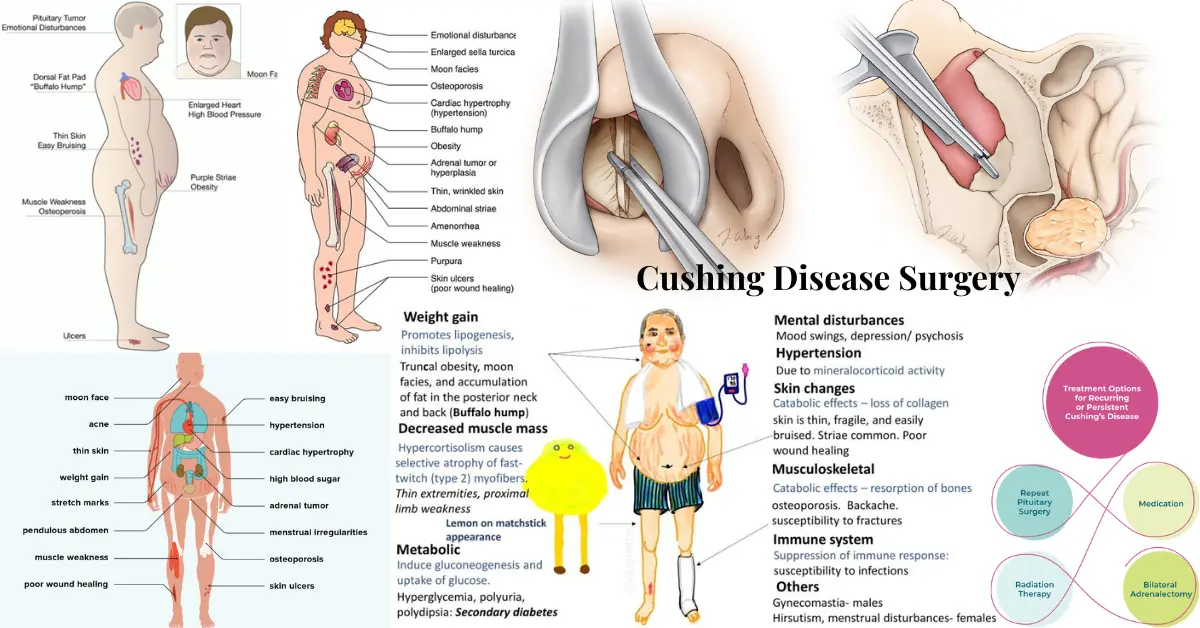
Cushing disease is a rare hormonal disorder caused by a pituitary tumor that leads to excessive production of adrenocorticotropic hormone (ACTH), which in turn overstimulates the adrenal glands to release cortisol. High cortisol levels over time can result in weight gain, high blood pressure, diabetes, muscle weakness, and mood changes, significantly affecting a person’s quality of life.
For most patients, the most effective treatment is Cushing disease surgery, typically performed to remove the tumor from the pituitary gland. The standard approach is transsphenoidal surgery, a minimally invasive technique that accesses the tumor through the nasal cavity, avoiding the need for open brain surgery. This surgical option offers the best chance for remission and hormone normalization when performed by experienced neurosurgeons.
Early diagnosis and timely surgical intervention are critical in preventing complications and restoring hormonal balance in patients with Cushing disease.
What Is Cushing Disease?
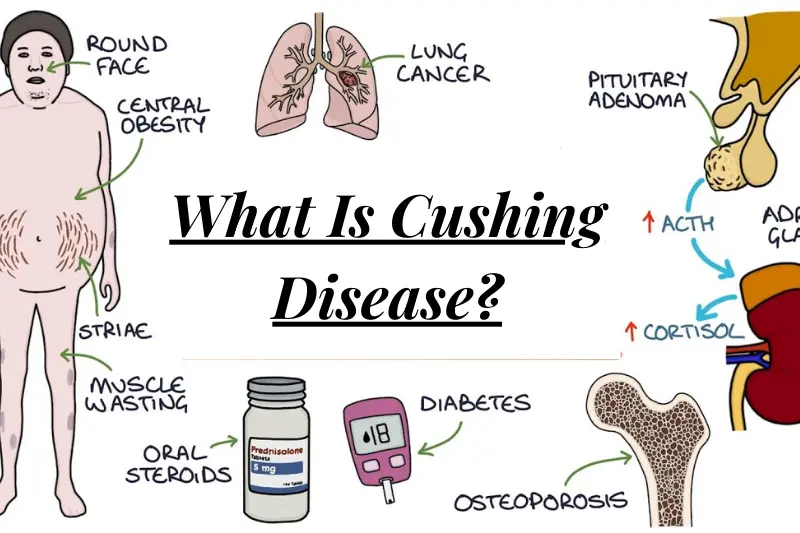
Cushing disease is a specific form of Cushing syndrome, a condition caused by prolonged exposure to high levels of cortisol — the body’s primary stress hormone. What sets Cushing disease apart is its origin: it’s caused by a benign pituitary tumor (called a pituitary adenoma) that overproduces adrenocorticotropic hormone (ACTH). This overstimulation prompts the adrenal glands to secrete excessive cortisol.
Cortisol plays an essential role in many body functions, including metabolism, immune response, and blood pressure regulation. However, too much cortisol can lead to serious health problems such as rapid weight gain (especially in the face and abdomen), thinning skin, fatigue, depression, osteoporosis, and insulin resistance.
It’s important to distinguish between Cushing disease and Cushing syndrome. While Cushing disease refers specifically to pituitary-related causes, Cushing syndrome can also be triggered by adrenal tumors or long-term steroid medication use.
Accurate diagnosis is the first step toward effective treatment, often involving Cushing disease surgery to remove the ACTH-producing pituitary tumor.
When Is Surgery Recommended for Cushing Disease?

Surgery is the first-line treatment for most patients diagnosed with Cushing disease, especially when imaging confirms the presence of a small pituitary tumor (adenoma). This approach is recommended because the root cause of the disease—a tumor that overproduces ACTH—can often be directly removed, offering the best chance for long-term remission.
Once a patient shows signs and symptoms of cortisol excess, doctors typically perform diagnostic tests such as 24-hour urinary cortisol tests, late-night salivary cortisol, dexamethasone suppression tests, and blood work to measure ACTH levels. If results point to a pituitary origin, an MRI scan of the brain is used to locate the tumor.
Cushing disease surgery, particularly transsphenoidal surgery, is advised when:
- A visible pituitary adenoma is detected
- Hormonal tests confirm pituitary-based ACTH overproduction
- The patient is in suitable health to undergo neurosurgery
In rare cases where no tumor is visible but hormone levels suggest pituitary disease, surgery may still be considered after more advanced testing.
Types of Surgery for Cushing Disease
The primary goal of Cushing disease surgery is to remove the ACTH-secreting pituitary tumor and restore normal hormone levels. The surgical approach depends on the tumor’s size, location, and visibility on imaging. The most commonly used and effective method is transsphenoidal surgery.
Transsphenoidal Surgery (Most Common Approach)
Transsphenoidal surgery is a minimally invasive technique that accesses the pituitary gland through the nasal cavity and sphenoid sinus, eliminating the need for a craniotomy (open skull surgery). This method allows the neurosurgeon to remove the tumor with precision while minimizing damage to surrounding brain tissue.
- Benefits of transsphenoidal surgery include:
- Shorter recovery time
- Reduced risk of complications
- No visible scarring
- High success rate when performed by an experienced surgeon
This approach is considered the gold standard for treating Cushing disease, especially for tumors smaller than 10 mm (microadenomas).
Other Surgical Options
While transsphenoidal surgery is preferred, other approaches may be considered in specific cases:
- Craniotomy: Rarely used, typically for large or invasive tumors that cannot be reached through the nasal route.
- Bilateral adrenalectomy: Surgical removal of both adrenal glands may be an option when pituitary surgery fails or isn’t possible. However, this leads to lifelong steroid replacement and risk of Nelson’s syndrome.
Each case is evaluated individually, with treatment plans tailored to the patient’s condition and response to prior therapies.
Risks and Complications of Cushing Disease Surgery
While Cushing disease surgery, especially transsphenoidal surgery, is generally safe and effective, it carries certain risks—like all surgical procedures. Understanding the potential complications helps patients make informed decisions and prepare for recovery.
Short-Term Risks
- Bleeding: Minor bleeding is common; major bleeding is rare but possible.
- Infection: Though uncommon, there is a risk of infection at the surgical site or in the sinuses.
- Cerebrospinal fluid (CSF) leak: A leak can occur if the thin membrane around the brain is breached during surgery. It is typically treatable but may require additional procedures.
- Nasal congestion or discomfort: Since the surgery is performed through the nasal passages, temporary symptoms like congestion or a runny nose are expected.
Hormonal Imbalances
- Hypopituitarism: Damage to the pituitary gland can lead to a deficiency in one or more hormones, requiring hormone replacement therapy.
- Adrenal insufficiency: After tumor removal, cortisol levels may drop sharply. Patients often need temporary corticosteroid replacement until their adrenal function stabilizes.
Other Complications
- Visual disturbances: If the tumor was near the optic nerves, vision may be affected, although this is rare.
- Recurrence: Even with successful surgery, there’s a small chance the tumor may return, especially in larger or more invasive tumors.
Choosing a highly experienced pituitary surgeon significantly reduces the risk of complications and improves the chances of a successful outcome.
Recovery After Cushing Disease Surgery
Recovery from Cushing disease surgery, especially transsphenoidal surgery, is generally smooth for most patients, but it requires close monitoring of hormone levels and symptoms in the weeks and months that follow. Since cortisol levels drop quickly after tumor removal, the body needs time to readjust.
Hospital Stay and Immediate Recovery
- Most patients stay in the hospital for 2–4 days after surgery.
- You may experience nasal congestion, mild headaches, or fatigue.
- Hydrocortisone or other steroid medications are typically prescribed immediately after surgery to prevent cortisol deficiency.
Hormone Monitoring and Adjustments
- Cortisol and ACTH levels are closely monitored through blood and urine tests.
- Many patients require temporary steroid replacement therapy, which is gradually tapered as the pituitary and adrenal glands begin to function normally.
- If hypopituitarism develops, long-term hormone therapy may be needed.
Long-Term Recovery Timeline
- Symptoms of high cortisol—such as weight gain, high blood pressure, and mood changes—may begin to improve within weeks to months.
- Energy levels, muscle strength, and mental clarity often take longer to return to normal.
- Full hormone balance may take 6–12 months or more, depending on individual recovery.
Lifestyle and Follow-Up
- Regular endocrinology check-ups are essential.
- Follow-up MRIs may be done to confirm complete tumor removal or check for recurrence.
With successful surgery, many patients achieve remission and experience a significant improvement in quality of life.
Success Rate and Prognosis of Cushing Disease Surgery
Cushing disease surgery, particularly transsphenoidal surgery, offers a high success rate—especially when performed by experienced neurosurgeons at specialized centers. However, outcomes can vary depending on factors such as tumor size, location, and whether the entire tumor can be removed.
Success Rate
- For microadenomas (tumors <10 mm), the remission rate after initial surgery is around 80–90%.
- For macroadenomas (tumors >10 mm), the success rate drops to 50–70%, due to the increased difficulty in achieving complete removal.
- Immediate post-surgery cortisol drop is often a good indicator of successful tumor removal.
Long-Term Outlook
- Most patients experience significant improvement in symptoms within months.
- Weight, blood pressure, mood, and glucose levels tend to normalize gradually.
- Bone density may take longer to recover, and muscle strength often requires physical rehabilitation.
Risk of Recurrence
- Recurrence rates range from 10–30%, often occurring years after surgery.
- Long-term monitoring with periodic hormone testing and MRI scans is essential.
- In cases of recurrence, options include repeat surgery, radiation therapy, or medical management.
Prognosis
When Cushing disease is diagnosed early and treated effectively, the prognosis is generally favorable. Quality of life can be significantly restored, and complications from prolonged cortisol exposure—like diabetes or cardiovascular disease—can be reversed or managed.
What If Surgery Doesn’t Work?
While transsphenoidal surgery is highly effective for many patients with Cushing disease, there are cases where surgery may not fully cure the condition. Persistent or recurrent disease requires additional treatment options to control cortisol levels and manage symptoms.
Revision Surgery
If residual tumor tissue remains or the disease recurs, a second surgery may be considered. Revision surgery can be more challenging due to scar tissue and altered anatomy but may still offer a chance for remission.
Radiation Therapy
For patients who do not achieve remission after surgery or who are not candidates for additional surgery, radiation therapy targeting the pituitary gland can be effective. It gradually reduces tumor activity and hormone production but can take months to years to achieve full effects.
Types of radiation therapy include:
- Conventional fractionated radiotherapy
- Stereotactic radiosurgery (e.g., Gamma Knife)
Medical Therapy
When surgery and radiation are insufficient or unsuitable, medications can help control cortisol levels. Common drugs include:
- Ketoconazole and metyrapone: Inhibit cortisol synthesis in the adrenal glands.
- Mifepristone: A cortisol receptor antagonist that blocks cortisol’s effects.
- Pasireotide: A somatostatin analog that reduces ACTH secretion.
Medical treatment is often used as a bridge while waiting for radiation effects or as long-term management in non-surgical candidates.
Bilateral Adrenalectomy
As a last resort, removal of both adrenal glands (bilateral adrenalectomy) eliminates cortisol production entirely but requires lifelong hormone replacement therapy and carries the risk of Nelson’s syndrome—a rapid growth of the pituitary tumor after adrenal removal.
FAQs About Cushing Disease Surgery
How long does recovery take after Cushing disease surgery?
Recovery usually involves a hospital stay of 2–4 days. Full hormonal balance and symptom improvement may take 6 to 12 months, with regular follow-ups to monitor cortisol levels and pituitary function.
Is Cushing disease surgery painful?
The surgery itself is performed under general anesthesia, so you won’t feel pain during the procedure. Postoperative discomfort is usually mild, including nasal congestion and headaches, which can be managed with medication.
Can Cushing disease come back after surgery?
Yes, there is a risk of recurrence, especially in larger or invasive tumors. Recurrence rates vary between 10–30%. Regular monitoring with blood tests and MRI scans is crucial to detect any return early.
Do you need medication after pituitary surgery for Cushing disease?
Many patients need temporary corticosteroid replacement immediately after surgery due to low cortisol levels. Some may require long-term hormone therapy if the pituitary gland is damaged or if the adrenal glands are slow to recover.
What are the chances of success with transsphenoidal surgery for Cushing disease?
Success rates are high—around 80–90% for small tumors and 50–70% for larger ones—when performed by experienced neurosurgeons.
Are there non-surgical treatments for Cushing disease?
Yes, medications like ketoconazole, metyrapone, and pasireotide can manage cortisol levels when surgery is not possible or as adjunct therapy.
Final Thoughts
Cushing disease surgery remains the cornerstone of treatment for patients with pituitary tumors causing cortisol overproduction. The minimally invasive transsphenoidal surgery offers high success rates and the best chance for lasting remission when performed by skilled neurosurgeons.
Early diagnosis, timely surgical intervention, and diligent postoperative care are essential for achieving optimal outcomes. While surgery carries some risks, most patients experience significant improvements in symptoms and quality of life after recovery.
If you or a loved one show signs of Cushing disease, consult an experienced endocrinologist or neurosurgeon promptly. Personalized treatment plans, including surgery and follow-up care, can make a life-changing difference.